


Federal cuts could take far more Colorado River water than states offered
Federal regulators want Arizona, California, and Nevada to give up nearly twice the water the states proposed cutting themselves. The plan would run through 2036 and govern both Lake Powell and Lake Mead.
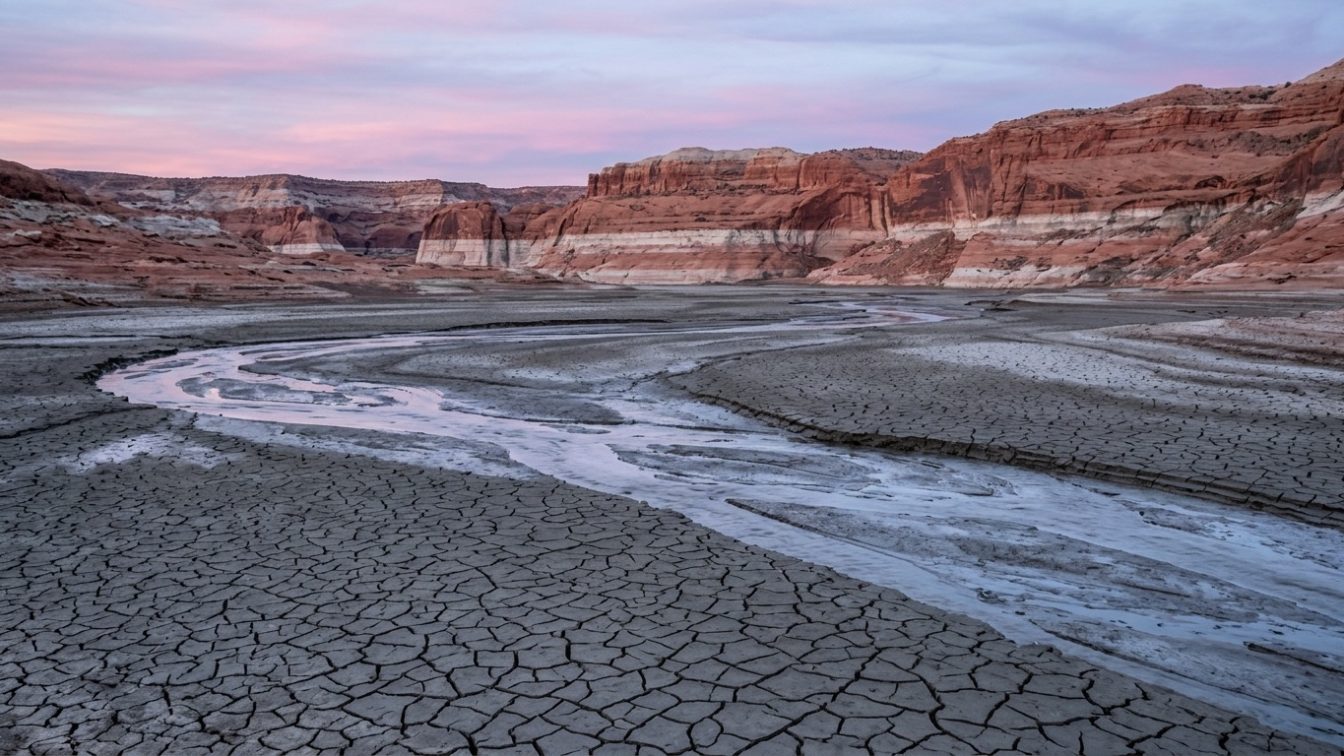
Table of contents
Summary of this article
- The U.S. Bureau of Reclamation proposed on July 31, 2026, to cut up to 3 million acre-feet of Colorado River water per year from Arizona, California, and Nevada during dry years.
- That is nearly double the 1.6 million acre-feet per year the Lower Basin states themselves proposed on May 1, 2026.
- The 10-year plan runs through 2036 and governs the river's two largest reservoirs, Lake Powell and Lake Mead.
- The Colorado River serves water to 1 in 10 Americans, irrigates land producing 15% of U.S. food output, and powers 6 million people across seven states.
- Colorado River flow has declined about 20% since 2000; climate models predict a further 20% drop by 2050 and 35% by 2100.
- The seven basin states spent more than three years failing to reach agreement, prompting the federal intervention.
- The Arizona Department of Water Resources called the proposal "unacceptable," and lawsuits could bring years more uncertainty.
- Households in the basin can cut exposure to lower water quality by filtering at the tap, storing water, and reducing use to slow the drawdown.
The U.S. Bureau of Reclamation proposed on July 31, 2026, to cut up to 3 million acre-feet of Colorado River water per year from Arizona, California, and Nevada during dry years. That is nearly double the 1.6 million acre-feet per year the three Lower Basin states offered to cut themselves on May 1.
The gap between those two numbers is the whole story. The states proposed one level of pain. The federal government proposed nearly twice as much. Reuters reported the plan, which NBC News carried on July 31, 2026.
For most people, a number measured in acre-feet sounds abstract. It is not. One acre-foot is roughly 326,000 gallons, enough to cover a football field in a foot of water, or to supply two to three average households for a year. A 3-million-acre-foot cut is a reduction on the scale of millions of homes.
And the river reaches far beyond the three states facing the cuts.
Why This River Matters to 1 in 10 Americans
The Colorado River provides water to 1 in 10 Americans, according to figures cited by Reuters. That is the first reason a regional cut is a national story.
The reach does not stop at drinking water. The river irrigates land producing 15% of U.S. food output. It generates power for 6 million people across seven states. The economy it supports is estimated at $1.4 trillion in GDP and 16 million jobs, water scientist Sharon Megdal has said.
Here is the plain-English translation. If you drink tap water anywhere the Colorado serves, eat produce grown in the Southwest, or draw electricity from a grid the river’s dams help feed, this proposal touches you, even if you live nowhere near the water.
The seven basin states are Colorado, New Mexico, Utah, Wyoming, Arizona, California, and Nevada. The first four sit in the Upper Basin. The last three sit in the Lower Basin, and they are the ones the federal proposal targets.
Why the Federal Government Stepped In
The states could not agree. That is why the Bureau of Reclamation intervened.
The seven basin states spent more than three years in talks to replace a water-sharing plan that expires this year, according to Reuters. They failed to reach consensus. So the federal government released a 10-year proposal through 2036, laid out in a final environmental impact statement, designed to give operators flexibility to run the river’s two largest reservoirs.
Those reservoirs are Lake Powell and Lake Mead. Both generate hydroelectric power. Both are at risk of dropping so low that their power plants stop functioning, Reuters reported.
“This framework provides the flexibility to respond to changing hydrologic conditions while preserving the opportunity for the Basin States to continue working toward durable, consensus-based solutions,” Secretary of the Interior Doug Burgum said.
The states did not welcome it. The Arizona Department of Water Resources called the proposal “unacceptable” and noted it did not require cuts from the four Upper Basin states. “Such reductions would devastate Arizona’s water users and its economy,” the Arizona statement said.
Lawsuits could follow. Legal challenges from states could mean years more uncertainty for the river, according to Reuters. JB Hamby, California’s lead negotiator, framed the proposal as a step, not a settlement. “This is an important milestone, but it is not the finish line,” Hamby said.
The River Is Shrinking, and the Data Is Clear
The cuts respond to a river with less water in it every decade.
Colorado River flow has declined about 20% since 2000, Reuters reported, and scientists largely attribute the rising regional temperatures behind that decline to human-caused climate change. The drought driving it is the worst the U.S. West has faced in at least 1,200 years, according to a 2022 study from the University of California, Los Angeles.
The trend does not reverse in the models. Climate projections predict an additional 20% drop in Colorado River flow by 2050 and 35% by 2100, Reuters reported. The 1,450-mile river is experiencing what scientists call aridification, a long-term drying with no expected end.
Set the history against the present. In 1922, the seven states signed a compact dividing the river’s water when its supply “seemed inexhaustible,” Reuters noted. A century later, the river carries far less than that compact assumed, and the federal proposal is an attempt to match rules to reality.
Who Gets Cut First
The cuts do not fall evenly. Under river rules, priority follows seniority.
The earlier a town or an irrigator started using Colorado River water, the higher its priority when supplies run short, Reuters reported. Junior users, those who started later, lose water first. The bureau’s cuts are expected to affect Arizona the most, because much of Arizona’s Colorado River supply sits low in the priority order.
That seniority system is why a shortage lands unevenly on farms, cities, and households depending on when their water rights were established. It is also why the fight is legal as much as hydrological. Every acre-foot cut has a name attached to it.
How a Water Cut Reaches Your Tap
From a building-biology standpoint, the principle holds at every scale: water quality tracks water quantity. Less water in the system changes more than the supply. It means different water. Three exposure pathways open as the river shrinks.
Contaminants concentrate. A river and its reservoirs dilute whatever enters them, agricultural runoff, salts, sediment, and industrial discharge. As flow drops about 20% and reservoir levels fall, the same load of contaminants packs into less water. Concentrations rise. The Colorado River already carries high salinity, and lower flow makes that worse, which raises treatment costs and can affect taste and household plumbing.
Water sits and warms. Lower, slower water heats up in the Southwest sun. Warmer water holds less oxygen and fuels algae growth, including blue-green algae blooms that can release toxins. Warmer source water is also harder and more expensive for a treatment plant to disinfect.
Systems switch sources. When Colorado River deliveries drop, utilities lean harder on groundwater and alternative supplies. Those sources carry their own risks, arsenic, nitrate, and other naturally occurring or agricultural contaminants that vary by aquifer. A change in your water’s source can change what is in your glass.
The through-line: a shrinking river passes the problem downstream, into treatment plants that must work harder and, eventually, into your plumbing.
Practical Steps You Can Take
You cannot add water to the Colorado River. You can control the water that reaches your home and reduce your own exposure as supplies tighten.
- Filter at the point of use
- A filter certified to NSF/ANSI Standard 53 reduces many contaminants that concentrate in low water. For dissolved contaminants and high salinity, a reverse osmosis system certified to NSF/ANSI Standard 58 is more thorough.
- Read your Consumer Confidence Report
- Every community water system must publish this annual report listing detected contaminants and, often, the source of your water. If your utility switches from river water to groundwater, this report shows the change.
- Test if you switch to well water
- If your area shifts to groundwater or you rely on a private well, test annually for arsenic, nitrate, and bacteria. Private wells fall outside federal drinking water rules, so the testing is on you.
- Store drinking water
- Keep a reserve, especially in a basin under shortage rules. One gallon per person per day is a standard planning figure for short-term interruptions.
- Cut your own use
- Following local watering and use restrictions leaves more water in Lake Powell and Lake Mead, which slows the drawdown that concentrates contaminants and threatens hydropower.
- Watch for algae advisories
- State and local agencies post warnings when blooms appear in low, warm reservoirs. Read them before swimming or letting pets near the shoreline.
Why This Matters Now
The proposal is a milestone. Nothing is resolved yet. The federal government put a 10-year framework on the table through 2036. The states may sue. Hamby called it “not the finish line,” and the operating plan for 2027 and 2028 is the next step.
But the direction is fixed by the water itself. Flow is down about 20% since 2000. Models point to 35% by 2100. Lake Powell and Lake Mead are close to the levels where their power plants stop working. Whatever plan finally holds, it will divide a river that carries less water every decade.
For the household at the end of the pipe, the stakes are concrete. The same shrinkage that forces a 3-million-acre-foot cut also concentrates contaminants, warms source water, and pushes utilities onto backup supplies. A regional water fight over acre-feet ends, quietly, at your tap.
Sources
- NBC News / Reuters. Federal proposal would deeply cut Colorado River water for Arizona, California and Nevada (2026) (July 31, 2026):
- U.S. Bureau of Reclamation, Colorado River Interim Operating Guidelines, Final Environmental Impact Statement:
- Arizona Department of Water Resources:
- Reuters. State official outlines proposed federal cuts to Colorado River water for Arizona (2026) (July 27, 2026):
- University of California, Los Angeles, 2022 study on Western megadrought (Nature Climate Change):
Questions people ask
What did the Bureau of Reclamation propose on July 31, 2026?
It proposed cutting up to 3 million acre-feet of Colorado River water per year from Arizona, California, and Nevada during dry years, as part of a 10-year plan through 2036 to operate the river's two largest reservoirs, Lake Powell and Lake Mead. Reuters reported the plan, carried by NBC News.
How much bigger is the federal cut than what the states proposed?
Nearly double. The three Lower Basin states proposed cutting 1.6 million acre-feet per year on May 1, 2026. The federal proposal calls for up to 3 million acre-feet per year.
Why does the Colorado River matter beyond the Southwest?
The river serves water to 1 in 10 Americans, irrigates land producing 15% of U.S. food output, and generates power for 6 million people across seven states, according to Reuters. It supports an estimated $1.4 trillion in GDP and 16 million jobs.
Why is the river shrinking?
Colorado River flow has declined about 20% since 2000, driven by rising temperatures that scientists largely attribute to human-caused climate change. Models predict a further 20% drop by 2050 and 35% by 2100. A 2022 UCLA study found the West is in its worst drought in at least 1,200 years.
Who gets their water cut first?
Priority follows seniority. Users who started drawing Colorado River water earlier keep their supply longer, while junior users lose water first. Arizona is expected to be affected the most because much of its supply sits low in the priority order.
How does a water cut affect my drinking water quality?
Less water concentrates contaminants and salts, warms and slows the water in ways that fuel algae, and pushes utilities onto groundwater and backup sources that carry their own risks like arsenic and nitrate.
What can I do at home?
Filter at the tap with an NSF-certified filter, read your Consumer Confidence Report, test well or groundwater for arsenic and nitrate, store drinking water, follow local use restrictions, and watch for algae advisories.
Have questions about the environment inside your home?
Air quality, mold, EMF, light and water all shape how a house feels and how the people in it feel. Whatever your concern is, the first step is finding out what is there.
Our certified team of environmental professionals and advocates can help.