


Palm Beach rejected a $2 billion data center over water and power demands
A hyperscale site can use 1 million to 5 million gallons of water a day, and the rejected proposal also called for 200 acres and 600 megawatts of power. Local officials voted it down.
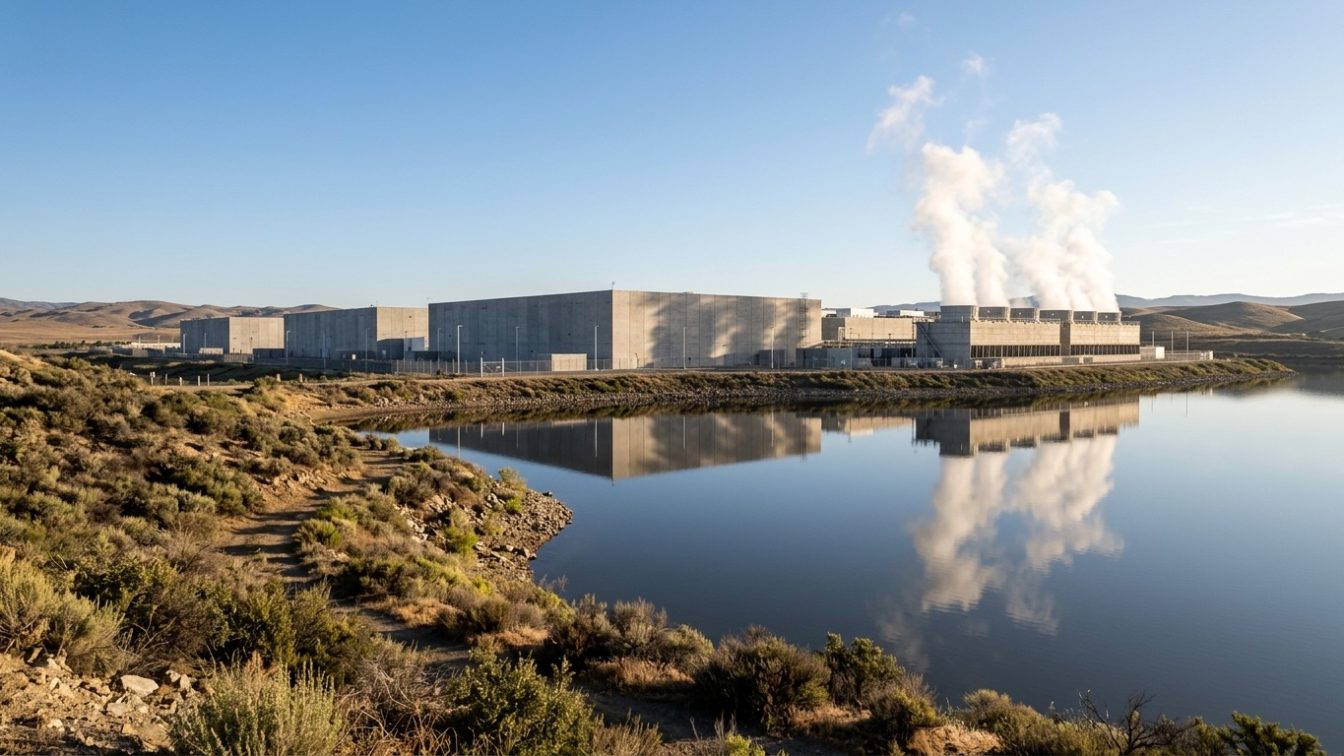
Table of contents
Summary of this article
- Palm Beach County commissioners voted 5-1 on July 16, 2026, to reject the $2 billion "Project Tango" AI data center, a 200-acre, 600-megawatt facility, largely over water concerns, according to WUSF and WLRN (July 30, 2026).
- Dr. Frederick Bloetscher, a civil, environmental, and geomatics engineering professor at Florida Atlantic University (FAU), says hyperscale AI data centers typically use 1 million to 5 million gallons of water a day.
- Project developers gave inconsistent estimates ranging from 5,000 gallons a day to 100,000 gallons of potable water a day; Bloetscher says even 100,000 is an underestimation.
- South Florida relies on the Everglades to recharge its aquifer; pulling millions of gallons out reduces the water available to recharge drinking water supplies.
- The proposed site sat next to sensitive regional water infrastructure, raising fears its consumption and discharge could disrupt or contaminate local drinking supplies.
- Florida Senate Bill 484 requires public hearings and lets regulators block permits that threaten local water resources.
- Palm Beach County paused all new large-scale data center applications, with a hearing on a temporary ban set for Aug. 27, 2026.
- Bloetscher recommends data centers use treated wastewater for cooling instead of potable water and manage stormwater to prevent neighborhood flooding.
A single hyperscale AI data center typically uses 1 million to 5 million gallons of water a day. That figure comes from Dr. Frederick Bloetscher, a civil, environmental, and geomatics engineering professor at Florida Atlantic University (FAU), speaking to WLRN in reporting carried by WUSF on July 30, 2026.
On July 16, 2026, Palm Beach County commissioners voted 5-1 to reject a $2 billion data center known as Project Tango. The proposal called for a 200-acre, 600-megawatt facility with roughly 4 million square feet of building space near the Arden neighborhood and Saddle View Elementary School. The main reason for the “no” vote was water.
For anyone who drinks South Florida tap water, the vote is a preview, not a conclusion. Tech companies are not backing away, and more proposals are expected. The question at the center of the fight is simple: where does the water come from, and what does pulling it out do to the supply that reaches your home?
The Numbers Nobody Could Pin Down
The water math never added up, and that was part of why the project failed.
Representatives for the applicant, PBA Holdings, gave inconsistent figures. Project manager Ernie Cox cited 5,000 gallons a day. County staff projected 100,000 gallons of potable water a day. The project also proposed a one-time use of more than 600,000 gallons to fill a closed-loop cooling system, a system that recycles its own water but still needs maintenance and rules to control what it discharges.
Bloetscher says even the higher figure is too low. The “often-recited ‘100,000 gallons of potable water a day’ is an underestimation,” he told WLRN, because hyperscale AI data centers typically consume 1 million to 5 million gallons a day.
The gap between 5,000 gallons and 5 million gallons is not a rounding error. It is a factor of a thousand. That uncertainty is exactly what troubled commissioners like Maria Sachs, who told WLRN the data center representatives “didn’t know” the exact numbers and offered too few guardrails to hold them accountable for local water use.
“Until they’re certain as to their effects on our environment, you cannot operate a county without sufficient water,” Sachs said.
Why a Data Center Drinks So Much Water
AI servers generate enormous heat, and heat has to go somewhere.
Here is the plain-English version. Rows of computer servers run day and night to train and operate AI systems. That work produces heat, and if the equipment overheats, it fails. To prevent that, many facilities use water for cooling, running it through the building to absorb heat, much the way sweat cools a body through evaporation.
The larger the facility, the more heat it makes and the more water it uses. A 600-megawatt facility like Project Tango falls into the hyperscale category, which is why Bloetscher’s 1-to-5-million-gallon range applies. Some of that water evaporates and is gone. Some carries heat away and must be treated before discharge.
The demand does not pause. A data center runs continuously, so its water use is not seasonal like lawn irrigation. It is a steady, around-the-clock draw on the same supply that serves homes, farms, and businesses.
The Everglades Connection
South Florida’s drinking water depends on the Everglades. That link is why Bloetscher warns about pulling millions of gallons out of the region.
The mechanism works like this. The Everglades holds and moves water across the landscape, and that water soaks into the ground to recharge the Biscayne aquifer, the porous rock layer that supplies drinking water to much of South Florida. Rainfall and Everglades flow refill the aquifer; wells and utilities draw it back out.
“We rely on the Everglades to recharge our aquifer,” Bloetscher told WLRN. “More water there is more water for us. But if you’re starting to pull it out, that means water’s being moved out of the Everglades … and water’s not available as it moves toward the coast.”
The consequence is a supply squeeze. Every million gallons a data center draws is a million gallons not recharging the aquifer or supporting the Everglades flow that feeds it. In a region where the aquifer sits close to the coast, less freshwater pressure also invites saltwater intrusion, seawater pushing inland into wells, raising salinity in drinking water near the coast.
The Contamination Risk Next Door
The Project Tango site sat next to sensitive regional water infrastructure. That location raised a second concern beyond consumption.
Critics feared the facility’s water use and discharge could disrupt or contaminate local drinking supplies, according to WLRN. A cooling system takes water in and sends water out. It sends water out, carrying heat and whatever chemicals are used to keep the system clean and prevent corrosion or biological growth. Without strict rules on that discharge, treated cooling water can affect the ecosystems and water bodies it enters.
The closed-loop design the developers proposed reduces ongoing withdrawals, but it does not eliminate the risk. As WLRN reported, the system “would still require ongoing maintenance and regulatory guardrails to mitigate environmental risks, such as controlling discharge into local ecosystems.”
The Law Meets the Local Reality
Florida gave regulators a tool for exactly this situation. Under Senate Bill 484, regulators must hold public hearings and can block permits if a project threatens local water resources.
The governing board of the South Florida Water Management District (SFWMD) told WLRN it is required to hold a hearing before issuing a water use permit for a large-scale data center. A project must prove its operations will not deplete neighboring wells, local farms, or public drinking supplies. Any application must include a water conservation plan and evaluate whether using reclaimed water is feasible.
There is a catch in how the process starts. SFWMD must stay neutral until a project formally applies for a permit. “No application from an AI data center means no action,” the district told WLRN. That is why local water authorities near the Project Tango site stayed quiet during the debate, legally, they could not weigh in until a permit request landed.
Bloetscher cautions that the law’s strength lives in the details. “The legislation says, ‘Don’t do harm,'” he told WLRN. “Somebody’s got to write rules to define what that is … The question then is, how does it get implemented at the local level?”
Palm Beach County is not waiting. A week before the Project Tango hearing, commissioners voted to pause all new large-scale data center applications. A public hearing and first vote on a temporary ban is set for Aug. 27, 2026. Because the Project Tango denial was issued “without prejudice,” the developers can revise their cooling plans and reapply.
How the Draw Reaches Your Tap
From a building-biology standpoint, the principle holds at every scale: water quality tracks water quantity, and you control a contaminant best at its source. A large, continuous industrial water draw is a source-level pressure on the supply that reaches your home. Three exposure pathways open.
The aquifer drops. When a facility pulls millions of gallons a day from the same aquifer that supplies homes, the water table falls faster than rain and Everglades flow can refill it. A lower table means wells reach deeper and the shared supply shrinks.
Contaminants concentrate. An aquifer dilutes whatever enters it, nitrate, salts, and other contaminants. As the volume of available freshwater drops, the same contaminant load packs into less water, so concentrations rise. Near the coast, saltwater intrusion adds sodium and chloride to wells that were once fresh.
Discharge enters shared water. Cooling water returned to the environment carries heat and treatment chemicals. Placed next to sensitive water infrastructure, that discharge can affect the same waters a utility later draws for drinking supply.
The through-line: a facility that consumes and discharges at industrial scale passes the pressure downstream, into the aquifer and, eventually, into your plumbing.
Practical Steps You Can Take
You cannot approve or deny a data center from your kitchen. You can protect the water that reaches your home and add your voice to how these projects get regulated.
- Attend or track the hearings
- SB 484 requires public hearings before a large-scale data center gets a water permit, and Palm Beach County’s ban hearing is set for Aug. 27, 2026. Public comment is a direct point of influence on water conditions attached to any approval.
- Push for treated wastewater cooling
- Bloetscher recommends forcing developers to use treated wastewater for cooling instead of potable drinking water. Supporting that rule in local comment keeps drinking water in the supply.
- Test your well
- If you draw from a private well, especially near the coast, test annually for nitrate, bacteria, and chloride (salinity). Private wells fall outside public water rules, so the testing is on you. Rising chloride signals saltwater intrusion.
- Read your Consumer Confidence Report
- Every community water system must publish this annual report listing detected contaminants. It shows how your source water is holding up and whether your utility has changed sources.
- Filter at the point of use
- A filter certified to NSF/ANSI Standard 53 reduces many contaminants that concentrate in a shrinking supply. For dissolved contaminants and high salinity, a reverse osmosis system certified to NSF/ANSI Standard 58 is more thorough.
- Cut your own use
- Following local watering restrictions leaves more water in the aquifer, which offsets industrial pressure and slows the drop in the water table.
- Ask about discharge and stormwater
- Bloetscher also flagged that a data center’s acres of concrete must handle heavy rain without flooding nearby homes. In local comment, ask how a project will manage both discharge and stormwater.
Why This Matters Now
The Project Tango vote is one decision in a fast-moving trend. Tech companies are not retreating from South Florida, and more large-scale proposals are expected. Each one arrives with the same core question the commissioners could not get answered: how much water, from where, and with what effect on the aquifer.
The scale is the point. A facility that uses 1 to 5 million gallons a day draws from the same Everglades-recharged aquifer that supplies drinking water, and it does so continuously, without a dry-season pause. When developers cannot say whether the number is 5,000 or 5 million, the county has no way to protect the supply.
For the household on the aquifer, the stakes are concrete. The water an AI data center pulls out is water that no longer recharges your drinking supply. The Aug. 27 hearing, the SB 484 process, and the push for wastewater cooling are the tools that decide how much of that pressure reaches your tap. Palm Beach was not alone. Sarasota County froze hyperscale data centers outright, until at least July 2027.
Sources
- WUSF / WLRN, Wilkine Brutus, "Water supply concerns remain top hindrance for AI data centers, says FAU expert" (July 30, 2026):
- WLRN. 'Not compatible': Palm Beach County rejects controversial Project Tango AI data center (2026) (July 16, 2026):
- Florida Senate, Senate Bill 484 (2026):
- South Florida Water Management District (SFWMD):
- Florida Atlantic University, Department of Civil, Environmental and Geomatics Engineering:
- Politico. The Pentagon wants to build data centers. Congress would like a word (2026) (July 25, 2026):
Questions people ask
How much water does an AI data center use?
A hyperscale AI data center typically uses 1 million to 5 million gallons of water a day, according to Dr. Frederick Bloetscher, a professor at Florida Atlantic University. Developers of the Palm Beach County "Project Tango" facility gave far lower estimates, from 5,000 to 100,000 gallons a day, which Bloetscher says are underestimations.
What was Project Tango and why was it rejected?
Project Tango was a proposed $2 billion, 200-acre, 600-megawatt AI data center near the Arden neighborhood and Saddle View Elementary School in Palm Beach County, Florida. Commissioners voted 5-1 on July 16, 2026, to reject it, largely because of concerns about its water use and inconsistent water estimates, according to WUSF and WLRN.
Why do data centers use so much water?
AI servers generate large amounts of heat, and many facilities use water to cool the equipment so it does not overheat and fail. A larger facility produces more heat and uses more water. Because a data center runs continuously, its water draw is steady and around the clock.
How does a data center's water use affect drinking water?
South Florida relies on the Everglades to recharge its aquifer, the underground source of drinking water. Pulling millions of gallons out for cooling leaves less water to recharge that aquifer, lowers the water table, concentrates contaminants in the remaining supply, and near the coast can invite saltwater intrusion.
What is Florida Senate Bill 484?
SB 484 requires regulators to hold public hearings before issuing a water use permit for a large-scale data center and allows them to block permits that threaten local water resources. A project must prove it will not deplete neighboring wells, farms, or public drinking supplies and must include a water conservation plan.
What is Palm Beach County doing next?
The county paused all new large-scale data center applications and set a public hearing and first vote on a temporary ban for Aug. 27, 2026. Because the Project Tango denial was issued without prejudice, the developers can revise their cooling plans and submit a new application.
What can I do to protect my water?
Track and attend the public hearings, support requiring treated wastewater for cooling instead of potable water, test a private well annually for nitrate and salinity, read your Consumer Confidence Report, filter at the tap with an NSF-certified filter, and follow local watering restrictions to leave more water in the aquifer.

Have questions about the environment inside your home?
Air quality, mold, EMF, light and water all shape how a house feels and how the people in it feel. Whatever your concern is, the first step is finding out what is there.
Our certified team of environmental professionals and advocates can help.