


Lead pipes under American yards may be poisoning children
9 million old lead service lines are still in use, and water can pick up lead from them even when it leaves the treatment plant clean. The risk sits between the main and the kitchen tap.
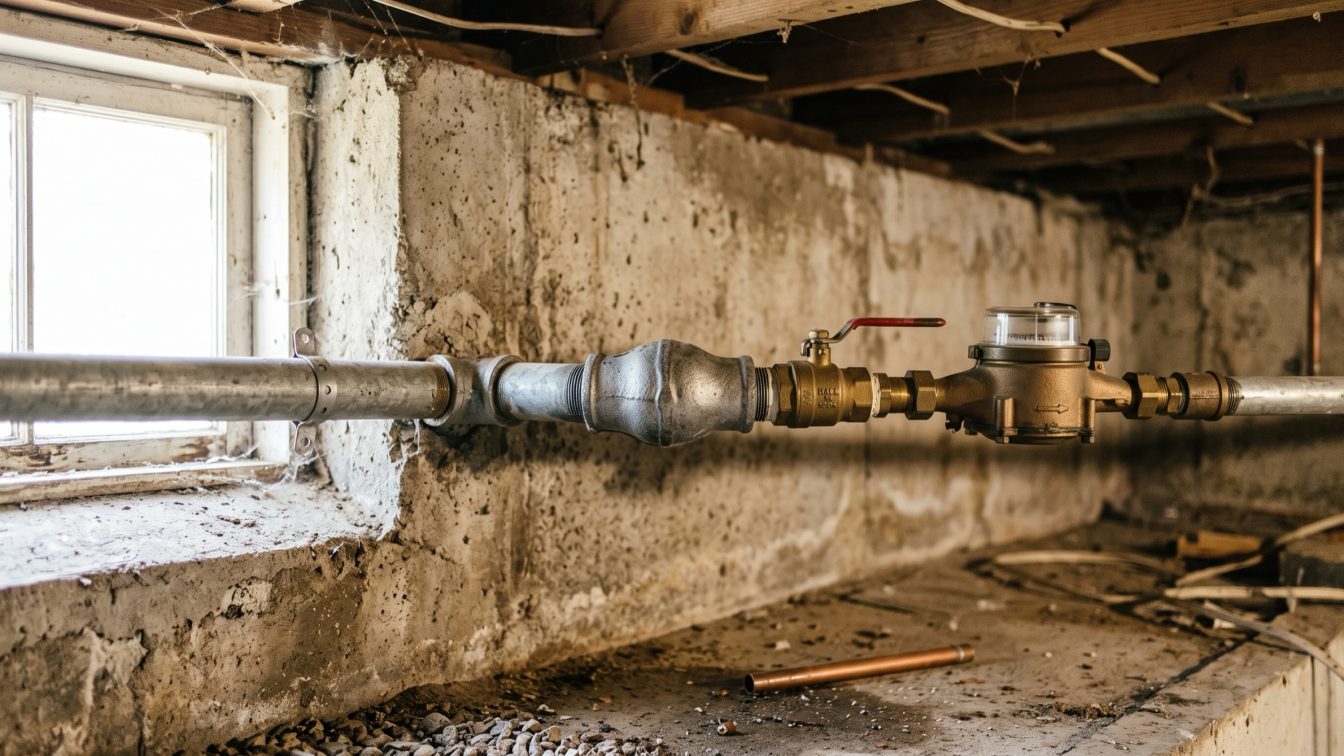
Table of contents
Summary of this article
- Lead service lines are a primary contributor to lead exposure in children, and the prevalence of lead pipes predicted elevated blood lead levels more strongly than other factors, Environmental Health News reported on November 14, 2025.
- A lead service line is the pipe that connects the water main in the street to a home's plumbing; the EPA estimates roughly 9 million remain in use across the US.
- Lead dissolves and flakes into drinking water from the pipe itself, so the contamination originates inside the home's own supply line, not the treatment plant.
- Water that sits still in the pipe, the first draw after hours of stagnation, carries the highest lead concentration.
- There is no safe level of lead for children; even low exposure is linked to lower IQ and effects on attention, behavior, and development.
- The EPA's action level for lead is 15 parts per billion, a regulatory trigger for water systems, not a health-based safety threshold.
- Full replacement of the lead service line is the permanent fix; certified filters and flushing reduce exposure in the meantime.
- Partial line replacement can temporarily raise lead levels, so a full replacement from the main to the home is the goal.
About 9 million lead pipes still run between the water main and American homes, by the EPA’s estimate. Each one is a direct line from a lead source to a kitchen tap.
A study summarized by Environmental Health News on November 14, 2025 found those pipes predicted elevated blood lead in children more strongly than anything else researchers examined. Lead paint, contaminated soil and imported goods all contribute. In the areas studied, the pipe outweighed them.
Which points the fix at one object. Water can leave the treatment plant clean and still pick up lead on the last stretch, inside a line the homeowner may own.
The pipe between the street and your kitchen
A service line joins the public main to the plumbing inside a building, running underground from beneath the street, across a yard, and into the house. In millions of homes built before lead pipe was restricted, that segment is lead.
Ownership usually splits. The utility owns the run from the main to the property line; the homeowner owns the rest. Neither party controls the whole pipe, which is a large part of why replacement has moved so slowly.
Age is the tell. These lines went in widely through the early and mid twentieth century, and any home built before 1986, when federal law restricted lead in new plumbing, is a candidate.
How lead gets into the water
Lead does not sit sealed inside a pipe. Corrosion pulls it out.
Water is not chemically neutral. Depending on acidity, mineral content and temperature, it strips lead off the inside surface. Part of that dissolves invisibly. The rest breaks loose as particles when the pipe is disturbed. Either way it heads for the tap.
Three conditions raise the amount. Stagnation matters most: the longer water sits against the pipe, the more lead it takes on. Heat speeds the reaction, so hot tap water carries more than cold. And corrosive water, low in the minerals that coat and protect a pipe’s interior, dissolves lead faster.
Physical disturbance does it too. Nearby construction, or a partial pipe replacement, shakes loose what has accumulated and spikes the concentration.
The first glass of the morning is the worst one
Water sits motionless in the service line for six, eight or more hours while a household sleeps, and lead dissolves into it the whole time. First-draw water carries that accumulated result. The same is true after any long absence, a workday or a trip.
Flushing works because of that timing. Running the tap clears the stagnant, high-lead water and pulls fresher water through. It removes neither the pipe nor all the lead, but it lowers the concentration of the water most likely to be drunk.
Testing hides this at the system level. A utility passes when 9 sampled homes in 10 come in under the line, so a system can clear its own test while one house keeps pouring lead.
Why children carry the risk
No blood lead level in a child is known to be free of harmful effects, according to the CDC. That reframes the goal: not staying under a threshold, but removing the exposure.
Two things concentrate the danger. A child’s body absorbs a larger fraction of what it swallows, so the same dose delivers more to the bloodstream. And lead attacks the developing brain and nervous system, the parts building fastest in early childhood. Lower IQ, shorter attention span, effects on behavior and learning, none of it reversing.
Formula-fed infants take the most concentrated version. Every bottle mixed with contaminated water delivers lead again, into a small body, during the period of fastest development. Filtered or verified lead-free water for formula is the single highest priority in a house with a lead line.
15 parts per billion is a utility trigger, not a safety line
EPA sets an action level of 15 parts per billion. Exceed it in a certain share of sampled homes and a water system has to act: adjust corrosion control, notify the public.
That number gets misread constantly. It obligates a utility, and certifies nothing about safety. A result under 15 is no clean bill of health. Read it as a number below the point where the system owes anyone a response.
Because no level is safe for a child, the health goal is zero, and a reading under the action level means the exposure is lower rather than absent. Source control still applies. The same gap between a system-wide number and one household’s water shows up in how PFAS detections vary by system size.
Cut the lead off at the source
Nobody sees, tastes or smells lead in water. Identify the pipe, cut the exposure while you work toward removing it, and treat full replacement as the actual fix.
Find out whether your line is lead. Utilities are now required to keep service line inventories, so ask. Then look where the line enters your house: lead is dull gray, scratches to shiny silver, and a magnet will not stick. Anything built before 1986 goes to the front of the queue.
Pursue full replacement. Taking out the whole line, main to house, ends the source permanently. Ask your utility about programs, funding and timelines, since many now help with the homeowner-owned portion.
Refuse a partial replacement. Swapping one section disturbs the pipe and can raise lead levels for a period afterward. Push for main-to-home or nothing.
Filter with something certified for lead. NSF/ANSI Standard 53 for lead reduction, whether faucet-mounted, pitcher or under-sink reverse osmosis. Change cartridges on schedule; a spent filter protects nobody.
Flush after stagnation. Run the cold tap until it turns noticeably colder, which means fresh water has reached you, before drinking or cooking.
Cold water only. Hot water dissolves more lead. Draw cooking and drinking water cold and heat it on the stove.
Filtered water for formula. Certified filter or verified lead-free source, every time.
Test your tap. Through your utility or a certified lab, so you know your own number. Retest after any plumbing work or line disturbance. Water quality varies by what carries it, which also shapes what else arrives at the tap.
Nine million pipes, no safe dose for a child, and a regulatory number that was never a promise about your kitchen. The source is the pipe, so the fix is the pipe. Find out what yours is made of, filter until it is gone, and use cold filtered water for every bottle you mix.
Sources
- Environmental Health News (EHN), November 14, 2025. Lead water pipes are a primary contributor to lead exposure in children, study says, on the finding that lead service lines are a primary contributor to children's blood lead levels and a stronger predictor of elevated levels than other factors.
- U.S. Environmental Protection Agency. Lead and Copper Rule, the lead action level of 15 parts per billion, the estimate of roughly 9 million lead service lines, and lead service line inventory and replacement requirements.
- Centers for Disease Control and Prevention. Guidance on childhood lead exposure, including that no safe blood lead level in children has been identified and the neurodevelopmental effects of lead.
- NSF International. NSF/ANSI Standard 53 certification for drinking water filters that reduce lead.
Questions people ask
What did the study on lead pipes and children find?
Environmental Health News reported on November 14, 2025 that a study found lead water pipes are a primary contributor to lead exposure in children. The prevalence of lead service lines was a stronger predictor of elevated blood lead levels than other factors the researchers examined, which points to the pipe itself as the leading intervention target.
What is a lead service line?
A lead service line is the underground pipe that connects the public water main in the street to a home's internal plumbing. In many areas the utility owns the portion up to the property line and the homeowner owns the rest. The EPA estimates roughly 9 million lead service lines still carry water to homes across the United States, mostly in buildings constructed before lead plumbing was restricted in 1986.
How does lead get from the pipe into my water?
Through corrosion. Water sitting against the pipe slowly dissolves lead from its interior surface, and small lead particles can also flake loose. The lead ends up in the water headed to the tap. Stagnation, heat, and corrosive water all increase how much lead enters, which is why water that sat in the pipe overnight carries the highest concentration.
Why are children so vulnerable to lead in water?
There is no safe level of lead for a child. A child's body absorbs a larger fraction of ingested lead than an adult's, and lead harms the developing brain and nervous system, which are building rapidly in early childhood. Exposure is linked to lower IQ and effects on attention, behavior, and learning. Formula-fed infants face concentrated exposure when formula is mixed with contaminated tap water.
Does water testing below 15 parts per billion mean it is safe?
No. The EPA's 15-parts-per-billion action level is a regulatory trigger that requires water systems to act, not a health-based safety standard. Because there is no safe level of lead for children, water below the action level is lower in lead but not certified safe. The health goal is zero, so source control still applies even when a test falls under the action level.
What is the single most effective thing I can do?
Get the lead service line fully replaced, from the water main to your home, because that permanently removes the source. Until then, use a filter certified to NSF/ANSI Standard 53 for lead removal, flush the cold tap after water has been sitting, use cold filtered water for drinking and for infant formula, and have your water tested. Avoid partial line replacements, which can temporarily raise lead levels.

Have questions about the environment inside your home?
Air quality, mold, EMF, light and water all shape how a house feels and how the people in it feel. Whatever your concern is, the first step is finding out what is there.
Our certified team of environmental professionals and advocates can help.