


The four ways forever chemicals reach your tap, and the machine built to end them
A Columbus, Ohio plant runs water past 705 degrees and 3,200 pounds of pressure to snap the carbon-fluorine bond in PFAS, which the EPA links to kidney and testicular cancer and thyroid disease.
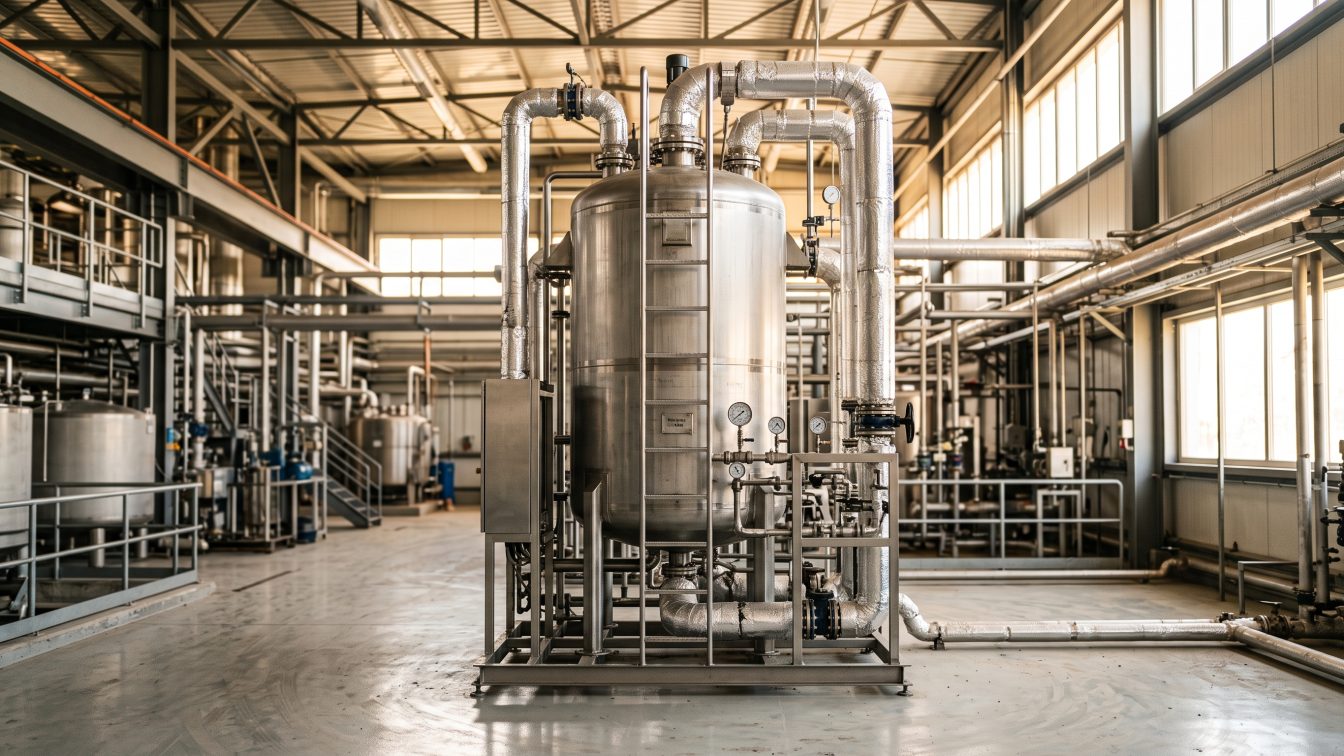
Table of contents
Summary of this article
- On July 7, 2026, EPA Administrator Lee Zeldin toured Revive Environmental Technology in Columbus, Ohio, which the EPA describes as the nation's first commercial PFAS destruction facility.
- Revive's "PFAS Annihilator" uses supercritical water oxidation to destroy PFAS in four waste streams: Aqueous Film-Forming Foam (AFFF), landfill leachate, industrial wastewater, and contaminated groundwater.
- Supercritical water oxidation heats and pressurizes water past a threshold where it breaks the carbon-fluorine bonds that make PFAS resistant to normal breakdown.
- Zeldin announced the EPA will release PFAS disposal and guidance documents annually rather than every three years, keeping pace with new destruction technology.
- The EPA's enforceable drinking-water limit for PFOA and PFOS is 4 parts per trillion; destroying PFAS at the source is the form of control that stops the chemicals before they reach a tap.
PFAS earned the nickname “forever chemicals” because they don’t break down. Once they reach your water or soil, they stay for generations. On July 7, 2026, EPA Administrator Lee Zeldin toured a plant in Columbus, Ohio, that’s built to change that.
Revive Environmental Technology runs a machine it calls the PFAS Annihilator. The EPA describes the site as the nation’s first commercial PFAS destruction facility. It treats four kinds of contaminated waste: firefighting foam, landfill runoff, industrial wastewater, and polluted groundwater. Those four are also four of the main ways PFAS get into your drinking water.
What PFAS are, in plain terms
PFAS stands for per- and polyfluoroalkyl substances. It’s a family of thousands of synthetic chemicals that companies have made since the 1940s.
Each one is built around a chain of carbon atoms bonded to fluorine. That carbon-fluorine bond is the strongest single bond in organic chemistry. It’s what lets PFAS shrug off heat, water, grease, and stains, which is why they show up in nonstick pans, waterproof jackets, food wrappers, and firefighting foam. The same toughness means nothing in nature pulls them apart. The bond that repels a grease stain also resists the processes that rot most other chemicals away.
So PFAS pile up. They build in water, in soil, and in your body over years. Even tiny, steady amounts keep adding up because none of it leaves.
How PFAS get into your water and your body
You take in PFAS mostly by drinking them. The four waste streams the Revive machine treats line up almost exactly with the four ways these chemicals reach a water supply.
Firefighting foam (AFFF). Aqueous Film-Forming Foam fought fuel fires for decades at airports, military bases, and fire training sites. It’s packed with PFAS. Every time crews sprayed it, the chemicals soaked into the ground and drifted toward groundwater. People living near these sites carry some of the highest PFAS levels in the country.
Landfill runoff. PFAS-loaded products like packaging, textiles, and carpets end up in landfills. Rain trickles through the trash and picks up the chemicals, making a liquid called leachate. If that liquid reaches groundwater, or goes to a treatment plant that can’t strip PFAS out, the chemicals head downstream toward drinking-water intakes.
Industrial wastewater. Factories that make or use PFAS flush them out in wastewater. Regular treatment plants weren’t designed to catch these chemicals, so they can slip straight through into rivers and aquifers.
Contaminated groundwater. Once PFAS reach an aquifer, they spread. Groundwater feeds private wells and city water alike, carrying the chemicals right to the tap.
The health toll is what makes this urgent. The EPA links PFAS exposure to kidney and testicular cancer, thyroid disease, high cholesterol, weaker vaccine response in children, and pregnancy problems including high blood pressure. In 2024 the agency set the first enforceable national drinking-water limits: 4 parts per trillion for PFOA and PFOS, two of the most studied types. That’s an extremely low ceiling. Think four drops in enough water to fill a string of Olympic swimming pools. It’s set that low because these chemicals do harm at tiny doses.
What supercritical water oxidation actually does
Most PFAS “treatment” doesn’t get rid of anything. Filters like granular activated carbon pull PFAS out of water, but the chemicals stay whole, sitting on the filter. That filter then turns into hazardous waste someone has to store or bury. The problem just moves.
The Revive process destroys them instead. Water hits a “supercritical” point at 705 degrees Fahrenheit and 3,200 pounds per square inch of pressure, where it stops acting like normal liquid or gas. In that state, water turns into a powerful solvent that, mixed with an oxidizer, rips organic molecules apart. Pushed that far, it snaps the carbon-fluorine bonds that make PFAS unbreakable under everyday conditions. What comes out the other side isn’t PFAS anymore. It’s broken down into simpler, harmless pieces.
Revive’s machine runs all four waste streams through this. For a town whose groundwater sits near an old firefighting-foam site, that’s the gap between babysitting a plume forever and being done with it.
The EPA is switching to yearly guidance
Zeldin also announced that the EPA will update its PFAS disposal and guidance documents every year instead of every three years.
Technology is moving faster than the old schedule. When guidance updated once every three years, a destruction method proven early on might sit for two more years before federal disposal rules officially recognized it. Facilities and regulators tend to hold off until updated guidance lands before they back a new method. That delay stalled cleaner options.
Yearly updates close that window. As Revive and others show that supercritical water oxidation works at full commercial scale, quicker guidance clears the way for more sites to destroy PFAS instead of falling back on capture-and-store methods that leave the chemicals whole. For anyone drinking the water, faster guidance means PFAS get destroyed near home sooner rather than filtered and stockpiled.
What you can do at home
You can’t build a plant like this. You can find out what’s in your water and cut your exposure with the right gear.
Check your utility’s PFAS data. The 2024 rule requires public water systems to test for PFAS and report the results. Pull up your Consumer Confidence Report and check the PFOA and PFOS levels against the 4 parts per trillion limit.
Test a private well. If you draw from a private well, especially within a few miles of an airport, military base, fire training site, landfill, or factory, get the water tested by a state-certified lab for PFAS. The federal monitoring rule doesn’t cover private wells.
Choose a filter that removes PFAS. Not every filter does the job. Reverse-osmosis systems and filters certified to NSF/ANSI Standard 53 or 58 for PFOA and PFOS reduction are the ones that work. Confirm the certification lists PFAS before you buy.
Keep the filter fresh. A PFAS filter only works if you swap it on schedule. A spent one stops catching the chemicals and can dump captured ones back into your water.
Cut the sources. Keep PFAS out of your house in the first place. Skip grease-resistant food packaging, pick cookware and fabrics labeled PFAS-free, and scan labels for “fluoro-” ingredients.
Nothing in nature breaks these chemicals down, which is how they got the name “forever.” A machine in Columbus now breaks them apart at commercial scale, and the EPA has promised yearly guidance updates to keep up. Whether that reaches the water near you depends on the sites, utilities, and regulators around you. Finding out what’s in your tap, and filtering it, is already in your hands.
Sources
- EPA. Administrator Zeldin Spotlights American Energy and Manufacturing on Ohio Trip (2026) (July 10, 2026):
- EPA, Per- and Polyfluoroalkyl Substances (PFAS) overview:
- EPA, Final PFAS National Primary Drinking Water Regulation (2024):
- EPA, PFAS health effects and drinking water health advisories:
- Revive Environmental, PFAS Annihilator supercritical water oxidation technology:
- Agency for Toxic Substances and Disease Registry (ATSDR), PFAS and your health:
- NSF International, PFAS reduction certification standards (NSF/ANSI 53 and 58):
Questions people ask
What did the EPA announce on the Ohio trip?
On July 7, 2026, EPA Administrator Lee Zeldin toured Revive Environmental Technology in Columbus, Ohio, which the EPA describes as the nation's first commercial PFAS destruction facility. He also announced the EPA will release PFAS disposal and guidance documents every year instead of every three years, and visited New River Electrical in Granville and PACCAR's Kenworth truck plant in Chillicothe.
What are PFAS, and why are they called "forever chemicals"?
PFAS are per- and polyfluoroalkyl substances, a family of thousands of synthetic chemicals built around carbon-fluorine bonds, the strongest single bond in organic chemistry. That strength makes them resist heat, water, and grease, but it also means they do not break down in the environment or the body. They accumulate over years, which is why they are called "forever chemicals."
How do PFAS get into drinking water?
Through four main routes, which are the same waste streams the Revive machine treats: firefighting foam (AFFF) that soaked into ground near airports and bases; landfill leachate from PFAS-laden products; industrial wastewater from factories; and contaminated groundwater that carries the chemicals to wells and municipal supplies. The EPA's enforceable limit for PFOA and PFOS is 4 parts per trillion.
What is supercritical water oxidation, and how is it different from a filter?
Supercritical water oxidation heats and pressurizes water past a threshold, roughly 705 degrees Fahrenheit and 3,200 pounds per square inch, where it becomes a powerful solvent that, with an oxidizer, breaks the carbon-fluorine bonds in PFAS apart. Unlike a carbon filter, which captures PFAS but leaves them intact as hazardous waste, this process destroys the chemicals rather than relocating them.
How can I protect my household from PFAS?
Check your water utility's PFAS monitoring data against the 4 parts per trillion limit, and test a private well through a certified lab if you live near a likely source. Use a reverse-osmosis system or a filter certified to NSF/ANSI Standard 53 or 58 for PFOA and PFOS, replace it on schedule, and reduce PFAS-containing products in your home.



Have questions about the environment inside your home?
Air quality, mold, EMF, light and water all shape how a house feels and how the people in it feel. Whatever your concern is, the first step is finding out what is there.
Our certified team of environmental professionals and advocates can help.