


The EPA finding that made federal CO2 limits possible is being rescinded
The 2009 endangerment finding is the legal basis for every federal greenhouse gas rule under the Clean Air Act. If it is rescinded, EPA loses the authority to write or defend those rules.
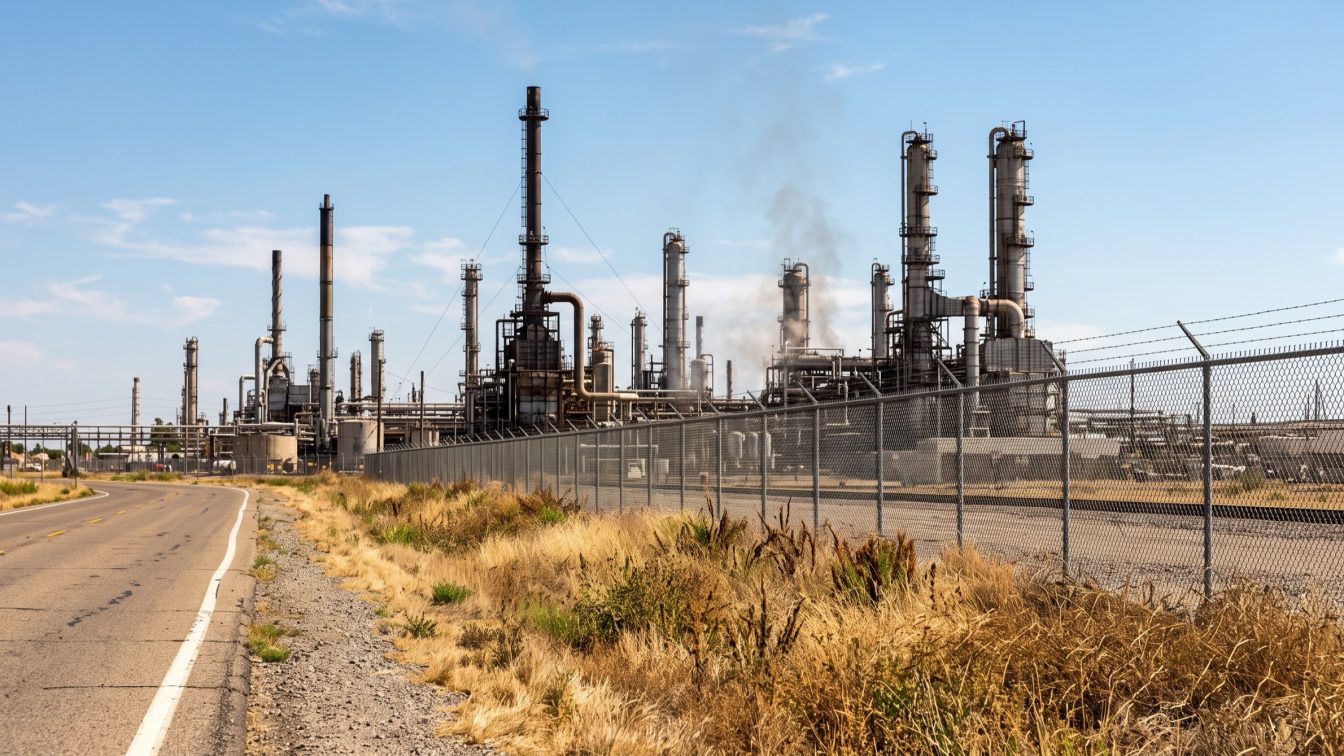
Table of contents
Summary of this article
- President Trump announced on February 12, 2026, that his administration would rescind the EPA's endangerment finding, the legal determination that allowed the agency to regulate greenhouse gas emissions from vehicles, factories, and refineries, according to NBC News.
- The endangerment finding, issued in 2009, is the legal basis under the Clean Air Act for federal rules limiting greenhouse gases; removing it removes the EPA's authority to issue or defend those rules.
- The finding covers greenhouse gases from three source categories NBC News named directly: vehicles, factories, and refineries.
- The combustion that produces carbon dioxide also produces fine particulate matter (PM2.5) and nitrogen oxides (NOx); rules that cut greenhouse gases generally cut these co-pollutants at the same time.
- PM2.5 and NOx concentrate near roads, factories, and refineries; the EPA's health-based air limits and household source control remain the practical tools for reducing exposure regardless of the finding's status.
President Trump announced on February 12, 2026, that his administration would rescind the EPA‘s endangerment finding. That finding is the legal determination that allowed the agency to regulate greenhouse gas emissions from vehicles, factories, and refineries, NBC News reported.
Those three source categories are the ones NBC News named directly. They are also three of the largest sources of the air pollution that reaches American homes. The connection between them is the point of this article.
The endangerment finding is not a rule you can see or a limit you can measure. It is the legal foundation underneath the rules that do those things. Remove the foundation, and the structure built on it loses its support. Here is what the finding was, what rescinding it changes, and how the pollution from cars, factories, and refineries actually reaches the place where you live.
What the endangerment finding was
Start with the mechanism, because the mechanism is the whole story.
The Clean Air Act directs the EPA to regulate an air pollutant if the agency finds that it endangers public health or welfare. In 2009, the EPA made exactly that finding for greenhouse gases, concluding that carbon dioxide and five other gases threaten public health. That conclusion is the endangerment finding.
The finding matters because it is the legal trigger. Under the Clean Air Act, the EPA cannot regulate a pollutant until it has determined the pollutant is dangerous. The 2009 endangerment finding is that determination for greenhouse gases. Every federal rule limiting carbon dioxide from cars, power plants, factories, and refineries traces its legal authority back to it.
NBC News described the finding plainly: it is the measure “that allowed for regulation of gas emissions.” The report said Trump announced his administration would be “rescinding a legal finding that allowed the Environmental Protection Agency to regulate greenhouse gas emissions from vehicles, factories and refineries.”
What rescinding it changes
Remove the finding, and you remove the legal basis for the rules.
This is the practical effect. If the EPA formally rescinds the endangerment finding, the agency loses the determination that authorizes it to regulate greenhouse gases under the Clean Air Act. Existing rules built on that finding become vulnerable to challenge, and new rules lose their footing before they can be written.
The distinction is important. Rescinding the finding does not, by itself, lift a specific emission limit overnight. It pulls out the legal support beneath the whole category of greenhouse-gas regulation. The rules that remain in place become harder to defend in court, and the agency’s authority to tighten them, or to issue new ones, is what disappears first.
For a resident, the near-term change is not a number on a meter. It is a shift in the direction of policy, away from tighter federal limits on the emissions from vehicles, factories, and refineries, and toward fewer.
Why carbon dioxide is not the only thing at stake
Here is the fact that connects a climate policy to the air in your living room.
Carbon dioxide itself is not a lung irritant at ambient levels. It does not cause asthma the way soot does. But carbon dioxide is a marker for combustion, and combustion never produces carbon dioxide alone. The same burning of gasoline, diesel, coal, and oil that releases CO2 also releases fine particulate matter and nitrogen oxides, two pollutants that reach deep into the human body.
This is why the endangerment finding reaches beyond climate. Rules built on it pushed cleaner engines, cleaner fuels, and tighter industrial controls. Those measures cut carbon dioxide and the co-pollutants together, because they all come out of the same stacks and tailpipes. Loosen the greenhouse-gas rules, and the co-pollutants tend to rise alongside the CO2, because the equipment that controls one controls the others.
Two pollutants carry the direct health weight: The same agency has moved on vehicle rules, changing who certifies whether your car parts are clean.
Fine particulate matter (PM2.5). These are particles small enough to bypass the body’s defenses and lodge deep in the lungs. The EPA links PM2.5 to asthma attacks, heart disease, and premature death. The EPA’s annual health-based standard for PM2.5 is 9 micrograms per cubic meter of air, a limit the agency lowered from 12 in 2024.
Nitrogen oxides (NOx). These gases form when fuel burns at high temperature. They irritate the airways, worsen asthma, and react in sunlight to form ground-level ozone. The EPA sets a 1-hour health standard for nitrogen dioxide at 100 parts per billion.
Both come from vehicles, factories, and refineries, the exact three categories the rescinded finding covered.
How the pollution reaches your home
Building biology studies how the built environment affects human health. Its first principle is source control: stop a pollutant where it originates rather than manage it after it spreads. The endangerment finding operated at the largest possible scale of source control, it authorized the EPA to limit the emissions at the tailpipe and the smokestack. When that scale weakens, the exposure pathways to individual homes matter more.
The pathways are specific and measurable:
Homes near highways. People who live within roughly 300 to 500 feet of a major road face measurably higher exposure to PM2.5 and NOx from vehicle exhaust. Vehicle emissions are one of the three categories the finding covered.
Homes near factories. Industrial facilities release particulate matter and nitrogen oxides from combustion and processing. Neighborhoods built near industrial zones carry a higher cumulative pollution load, often lower-income communities with the least ability to relocate.
Homes near refineries. Oil refineries emit a mix of PM2.5, nitrogen oxides, sulfur dioxide, and volatile organic compounds. Communities beside refinery fence lines are among the most exposed populations in the country, breathing both routine emissions and the spikes that come with flaring events.
The through-line is proximity. The closer a home sits to a road, a factory, or a refinery, the higher the exposure. Distance is the single largest variable a household can rarely change, which is why the strength of the rules governing the source matters so much to the people who cannot move away from it.
The cost argument and the trade behind it
The case for rescinding the finding rests on cost. Federal greenhouse-gas rules impose compliance expenses on automakers, manufacturers, and refiners, and those expenses can raise the price of vehicles, goods, and fuel. Removing the finding removes the legal engine behind those expenses.
That is the benefit side of the ledger, and it is real. The trade sits on the other side. The compliance costs the rules imposed were, in large part, the cost of cleaner combustion, the equipment and fuel changes that cut PM2.5 and NOx along with CO2. Remove the requirement, and the savings spread across manufacturers and, potentially, consumers. The air burden concentrates on the households nearest the roads, factories, and refineries. The savings are broad. The exposure is local.
What has not changed
One point matters for every household. Rescinding the endangerment finding targets greenhouse-gas authority. It does not repeal the EPA’s separate health-based air quality standards for the pollutants that most directly affect your lungs.
The National Ambient Air Quality Standards, the limits for PM2.5, ozone, nitrogen dioxide, sulfur dioxide, carbon monoxide, and lead, rest on their own legal footing under the Clean Air Act. Those standards are the numbers to watch. The PM2.5 limit of 9 micrograms per cubic meter and the nitrogen dioxide limit of 100 parts per billion remain the health-based thresholds against which your local air is measured. Tracking them is how a resident reads the actual air, regardless of the endangerment finding’s status.
What you can do
You cannot restore a federal legal finding from your living room. You can measure your exposure, reduce it at home, and act on the decision through the channels that remain open.
Know your distance to a source. If you live within 500 feet of a highway, or near a factory or refinery, treat that as an elevated-exposure zone. Proximity is the biggest driver of exposure to vehicle, industrial, and refinery pollution.
Track your local air against the thresholds. Use the EPA’s AirNow data or a home PM2.5 monitor. Compare readings to the 9 micrograms per cubic meter annual standard for fine particles. A reading consistently above it signals a source-control problem worth acting on.
Filter the indoor air. A portable air cleaner with a HEPA filter reduces indoor PM2.5. For whole-house coverage, a MERV-13 filter in a central HVAC system captures fine particles across every room.
Control the intake pathway. Keep windows closed on the side facing a road, factory, or refinery during heavy traffic or flaring, and seal gaps around doors and windows that face the source.
Watch for a public comment period. A formal repeal of the endangerment finding requires a rulemaking process with public comment. That is the channel where residents near these sources can put the health question on the record.
Track your state’s rules. Some states set their own vehicle and industrial emission standards. State-level limits can persist even as federal authority weakens, and they are decided closer to home.
President Trump announced the repeal of the finding that gave the EPA its authority to regulate greenhouse gases from vehicles, factories, and refineries. The same combustion that produces those gases produces the fine particles and nitrogen oxides that reach your lungs. Whether the federal rules that controlled both stay in place is now a legal and political question, but the health-based air standards, and the source control you can apply at home, remain the tools for reading and reducing what you breathe.
Sources
- NBC News. Trump announces repeal of measure that allowed for regulation of gas emissions (2026) (Feb. 12, 2026):
- EPA, Endangerment and Cause or Contribute Findings for Greenhouse Gases (2009):
- EPA, National Ambient Air Quality Standards (NAAQS) table:
- EPA, Particulate Matter (PM2.5) basics and health effects:
- EPA, Basic information about NO2 (nitrogen dioxide) and health:
- EPA, Final Reconsideration of the National Ambient Air Quality Standards for Particulate Matter (2024):
- EPA, AirNow real-time air quality data:
- EPA, Research on near-roadway air pollution and health:
Questions people ask
What is the EPA's endangerment finding?
The endangerment finding is the EPA's 2009 legal determination that greenhouse gases, including carbon dioxide, endanger public health. Under the Clean Air Act, the EPA cannot regulate a pollutant until it finds the pollutant is dangerous. The endangerment finding is that determination for greenhouse gases, and it is the legal basis for federal rules limiting emissions from vehicles, factories, and refineries.
What did President Trump announce on February 12, 2026?
President Trump announced that his administration would rescind the endangerment finding, NBC News reported. The finding is the measure that allowed the EPA to regulate greenhouse gas emissions from vehicles, factories, and refineries. Rescinding it removes the legal basis for the agency to regulate those emissions under the Clean Air Act.
How does repealing a greenhouse-gas rule affect the air I breathe?
The combustion that produces carbon dioxide also produces fine particulate matter (PM2.5) and nitrogen oxides (NOx). Rules built on the endangerment finding cut all of these together by requiring cleaner engines, fuels, and industrial controls. Loosening the greenhouse-gas rules tends to let the co-pollutants rise, because the same equipment controls them. PM2.5 is tied to asthma, heart disease, and premature death.
Does this repeal remove the EPA's air quality standards for pollution?
No. The National Ambient Air Quality Standards for PM2.5, ozone, nitrogen dioxide, and other pollutants rest on their own legal footing. The PM2.5 annual limit is 9 micrograms per cubic meter, and the nitrogen dioxide 1-hour limit is 100 parts per billion. Those health-based standards are the numbers to track for the air near your home.
What can I do to protect my household?
Know your distance to highways, factories, and refineries, within 500 feet is an elevated-exposure zone. Track local air with EPA AirNow data or a home PM2.5 monitor against the 9 micrograms per cubic meter standard. Use a HEPA air cleaner indoors and a MERV-13 filter in central HVAC. Keep windows closed on the source-facing side, and submit comments during any formal repeal rulemaking.

Have questions about the environment inside your home?
Air quality, mold, EMF, light and water all shape how a house feels and how the people in it feel. Whatever your concern is, the first step is finding out what is there.
Our certified team of environmental professionals and advocates can help.