


War near the Strait of Hormuz could cut fertilizer runoff into US waterways
Closing the strait disrupted a third of the world's traded farm nutrients, pushing growers to plant several million fewer acres of corn. With less fertilizer going on fields, less nitrogen reaches the water.
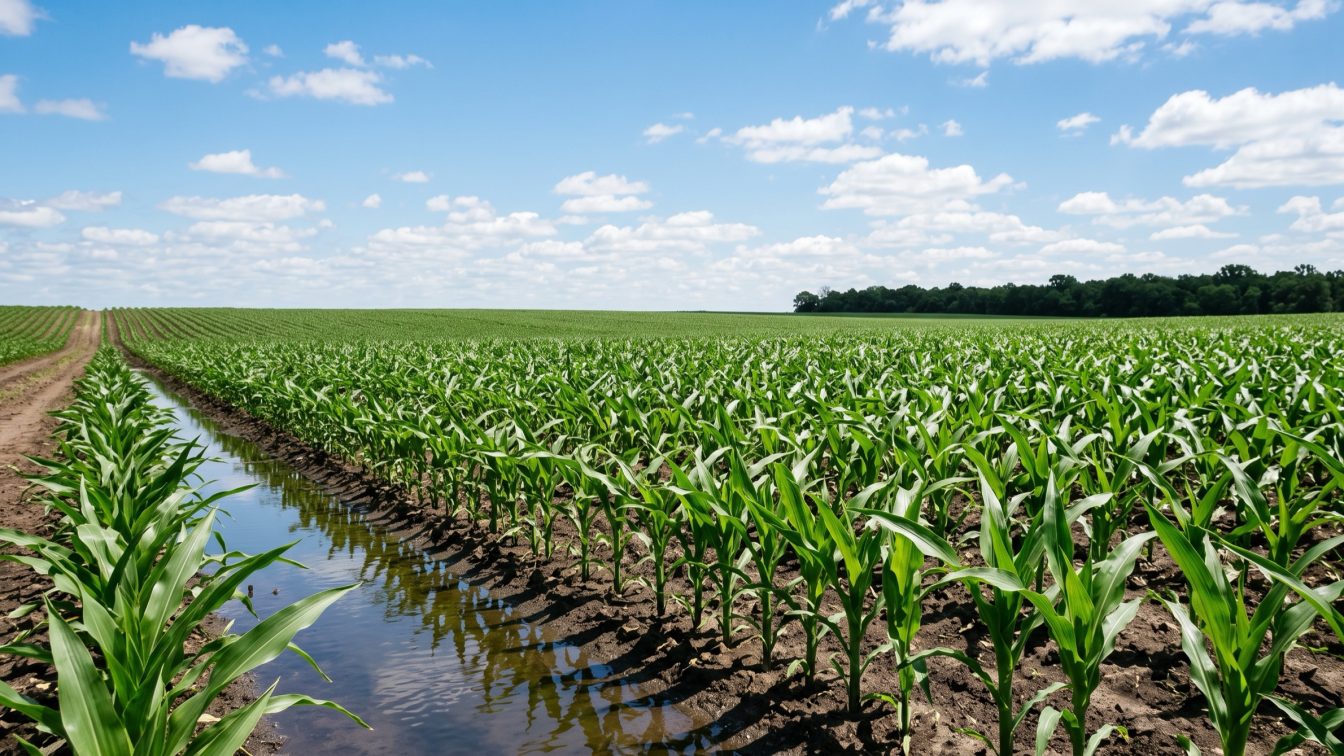
Table of contents
Summary of this article
- The closure of the Strait of Hormuz has disrupted about one-third of the world's traded agricultural fertilizers, according to researchers writing in The Conversation, citing UNCTAD.
- US farmers are expected to plant several million fewer acres of corn in 2026 than in 2025 as fertilizer prices rise and supplies tighten.
- Decades of overfertilizing have built large legacy reserves of nitrogen and phosphorus in US soil, which crops can draw on even when farmers apply less.
- In parts of the central Midwest and livestock-heavy eastern regions, soil phosphorus reserves are large enough to maintain crop production with less new fertilizer, the researchers' analysis found.
- Excess nutrients that crops never absorb leach into groundwater and run off into rivers and lakes, driving algal blooms, coastal dead zones, and greenhouse gas emissions.
- The shortage may reduce that runoff, and manure from livestock and anaerobic digesters could substitute for some synthetic fertilizer.
- The same legacy-nutrient dynamic operates in residential yards: overfertilizing sends excess nitrogen and phosphorus into local waterways, and testing before applying cuts it at the source.
Closing the Strait of Hormuz cut off about a third of the world’s traded farm fertilizer. Researchers writing in The Conversation report the figure, citing UN trade data. Prices are climbing, and US growers are expected to plant several million fewer acres of corn in 2026 than in 2025.
That reads as a food-supply threat, and the researchers do not argue otherwise. Their analysis points at a second outcome nobody planned.
Decades of farmers applying more fertilizer than crops could use built enormous nutrient reserves in the soil. Crops can draw on those reserves while less new fertilizer goes down. Less fertilizer means fewer nutrients running into rivers, lakes and coastal water.
Corn takes the hardest hit
One chokepoint explains it. The Strait of Hormuz carries roughly a third of globally traded agricultural fertilizer. Closing it cut deliveries, along with the fuel and raw materials fertilizer production runs on.
Farmers worldwide are cutting back or switching to less fertilizer-hungry crops. Corn absorbs the worst of it, being one of the most fertilizer-intensive and widely grown crops in the country. Several million fewer acres in 2026 is the visible result.
The researchers study agricultural nutrient cycles and nutrient pollution of waterways, and they argue the picture is more complicated than a shortage. The reason sits underground.
Decades of overpaying into the soil
Farmers here and worldwide steadily raised fertilizer application for decades to feed a growing population. Despite years of advice to apply less, they consistently put down more nitrogen and phosphorus than crops actually need, the researchers’ work suggests.
Surplus does not vanish. Nutrients plants never take up accumulate in soil, building stores of nitrogen and phosphorus that persist long after application. In highly intensive systems, research shows fertilizer can be cut substantially with little or no effect on yield.
Soil has been overpaying into a nutrient account for decades. That balance is now available to spend.
Where the excess has been going
The surplus buffering a crop against shortage is the same surplus fouling the water.
Nutrients crops do not absorb leach into groundwater or run off into rivers and lakes. Downstream they feed disaster: excess nitrogen and phosphorus drive dangerous algal blooms, coastal dead zones and greenhouse gas emissions.
A dead zone forms when a bloom dies and decomposes, stripping oxygen from the water until fish and crabs cannot survive in it. Lake Erie’s blooms and the Gulf of Mexico dead zone are the familiar American cases. Nutrients are also the first of the three problems driving Florida’s failing waterways.
The logic runs one direction. More fertilizer than crops can use means more available to escape. Applying less means less escaping. Which is why the researchers see a possible upside here: crops living off legacy reserves while less goes down could mean cleaner water downstream.
How long the buffer lasts
The researchers are careful about the edges of their argument. Not every field holds enough leftover nutrient to keep yields up on less fertilizer, and no buffer lasts forever.
Their analysis of phosphorus across US croplands found large soil reserves. Parts of the central Midwest, and livestock-heavy regions of the East, hold enough to maintain production without much new fertilizer. In those saturated systems, cutting back lowers costs and environmental losses without proportionately cutting output.
Where soil is naturally poor, parts of sub-Saharan Africa among them, better access to fertilizer remains essential to growing food at all.
Stored surplus is not permanent supply. It draws down, at a rate that varies field by field. This growing season is a chance to find out how strong the buffer is, the researchers wrote. Applying less would also show whether water quality downstream improves.
Manure as the replacement
Shortage may also change where nutrients come from. Livestock produce manure high in both nitrogen and phosphorus, which makes excellent fertilizer.
Processing extends it. Anaerobic digesters turn manure into a nutrient-rich slurry and generate electricity as a byproduct of the reactions. Running more manure through digesters and delivering that slurry to crop farmers would cut dependence on foreign fertilizer. A waste stream becomes two useful things.
Your lawn does the same thing
Smaller volume, identical chemistry. A lawn fertilized on a fixed schedule builds the same surplus, and the excess leaves the same way.
Nitrogen and phosphorus the grass never absorbs wash off in rain into storm drains, and most drains discharge to the nearest waterway untreated. Household surplus joins agricultural surplus in the same rivers, feeding the same blooms.
Yards hold legacy reserves too. A lawn fed every season for years already carries accumulated phosphorus that new applications only add to. Minnesota, Maryland and other Chesapeake Bay watershed states restrict phosphorus in lawn fertilizer unless a soil test shows a deficiency. That writes the researchers’ finding into law: most of what homeowners apply is not needed, and what is not needed becomes pollution.
What the shortage is doing to farm runoff by force, a gardener can do on purpose.
Cut what leaves your yard
Test the soil first. A test names which nutrients your lawn is short of, so you skip the ones rain would carry off. Many state extension services run low-cost testing. Test before the season, not on a calendar.
Match the fertilizer to the test. Real deficiency, specific nutrient, recommended amount. Broad scheduled applications of all-purpose synthetic fertilizer are what build the runoff-prone surplus. A private well is nobody’s job but yours, and nitrate is the reason to test one.
Skip phosphorus unless a test demands it. Established lawns usually hold plenty already, and several states restrict it outright.
Never fertilize before rain. Applying ahead of a storm sends most of it into runoff. Wait for dry weather.
Feed the soil with compost. It releases slowly and builds soil that holds nutrients, cutting both what you apply and what escapes.
Keep clippings and granules off pavement. Anything swept into the street goes down a storm drain and releases nutrients straight into water. Sweep it back onto the grass.
Aim downspouts at soil. Roof runoff directed at planted ground soaks in rather than running to the street.
Plant a buffer near water. Bordering a ditch, stream or pond, a strip of vegetation or a rain garden filters runoff first. That works as the residential version of the buffers protecting farm streams.
A closed strait cut a third of the world’s traded fertilizer and took several million acres of American corn with it. Underneath those fields sit decades of nutrients nobody’s crops ever used, enough in places to carry a season on less. Whether that shows up as cleaner rivers is the accidental experiment now running, and every fertilized lawn is a small copy of it.
Sources
- The Conversation. War-induced fertilizer shortage may be reducing US soil and water pollution, on the Strait of Hormuz disruption, legacy soil nutrient reserves, nutrient runoff, and manure and anaerobic digesters as fertilizer substitutes.
- United Nations Conference on Trade and Development (UNCTAD), cited by The Conversation. Estimate that the Strait of Hormuz carries about one-third of the world's traded agricultural fertilizers.
- Research on phosphorus use across US croplands, cited by The Conversation. Analysis finding that soil reserves in parts of the central Midwest and livestock-dominated eastern regions can maintain crop production with less new fertilizer, and that fertilizer can be cut substantially in intensive systems with little to no yield effect.
- Environmental Protection Agency. Nutrient pollution and stormwater runoff guidance, on nitrogen, phosphorus, algal blooms, dead zones, and household sources of runoff.
Questions people ask
How is a fertilizer shortage connected to water pollution?
Excess nutrients are the link. Nitrogen and phosphorus that crops never absorb leach into groundwater and run off into rivers and lakes, driving algal blooms, coastal dead zones, and greenhouse gas emissions, researchers wrote in The Conversation. When a shortage forces farmers to apply less fertilizer, fewer of those excess nutrients escape into waterways, which may reduce the runoff that fuels blooms and dead zones.
Why can farmers cut fertilizer without losing much yield?
Because of legacy nutrient reserves. For decades, farmers applied more nitrogen and phosphorus than their crops needed, and the surplus accumulated in the soil, the researchers wrote. Crops can draw on those stored reserves when new fertilizer is scarce. Their analysis found that in parts of the central Midwest and livestock-heavy eastern regions, soil phosphorus reserves are large enough to maintain production with less new fertilizer.
What caused the fertilizer shortage?
The closure of the Strait of Hormuz. The strait carries about one-third of the world's traded agricultural fertilizers, along with the energy and raw materials needed to produce and transport it, according to The Conversation, citing UNCTAD. The closure disrupted those deliveries, raised prices, and led US farmers to plant several million fewer acres of corn in 2026 than in 2025.
Does my lawn contribute to nutrient pollution?
Yes. Nitrogen and phosphorus applied to a lawn that the grass never absorbs wash off in rain and flow into storm drains, which in most communities discharge to the nearest waterway without treatment. From there, household runoff joins agricultural runoff in feeding the same algal blooms. Several states restrict phosphorus in lawn fertilizer for this reason.
How do I know how much fertilizer my yard actually needs?
Test your soil. A soil test, available at low cost through many state extension services, shows which nutrients your lawn or garden lacks and how much to apply. Testing before the growing season, rather than fertilizing on a fixed calendar, prevents the excess nitrogen and phosphorus that rain washes into waterways. Established lawns often hold enough phosphorus already.
What can I do at home that mirrors what farms are doing?
Apply source control. Reduced farm fertilization draws down a legacy nutrient surplus and cuts runoff; a homeowner does the same by testing the soil, applying only the deficient nutrient, skipping unneeded phosphorus, and feeding the soil with compost. Avoid fertilizing before rain, keep clippings and granules off pavement, and add a buffer strip or rain garden near any water.
Have questions about the environment inside your home?
Air quality, mold, EMF, light and water all shape how a house feels and how the people in it feel. Whatever your concern is, the first step is finding out what is there.
Our certified team of environmental professionals and advocates can help.