


Florida just took control of a $23 billion Everglades rescue project
Florida now controls a major effort to move more fresh water south from Lake Okeechobee toward Florida Bay, a shift that could shape the Everglades for decades. State officials and the Army Corps signed the handover on July 21, 2026.
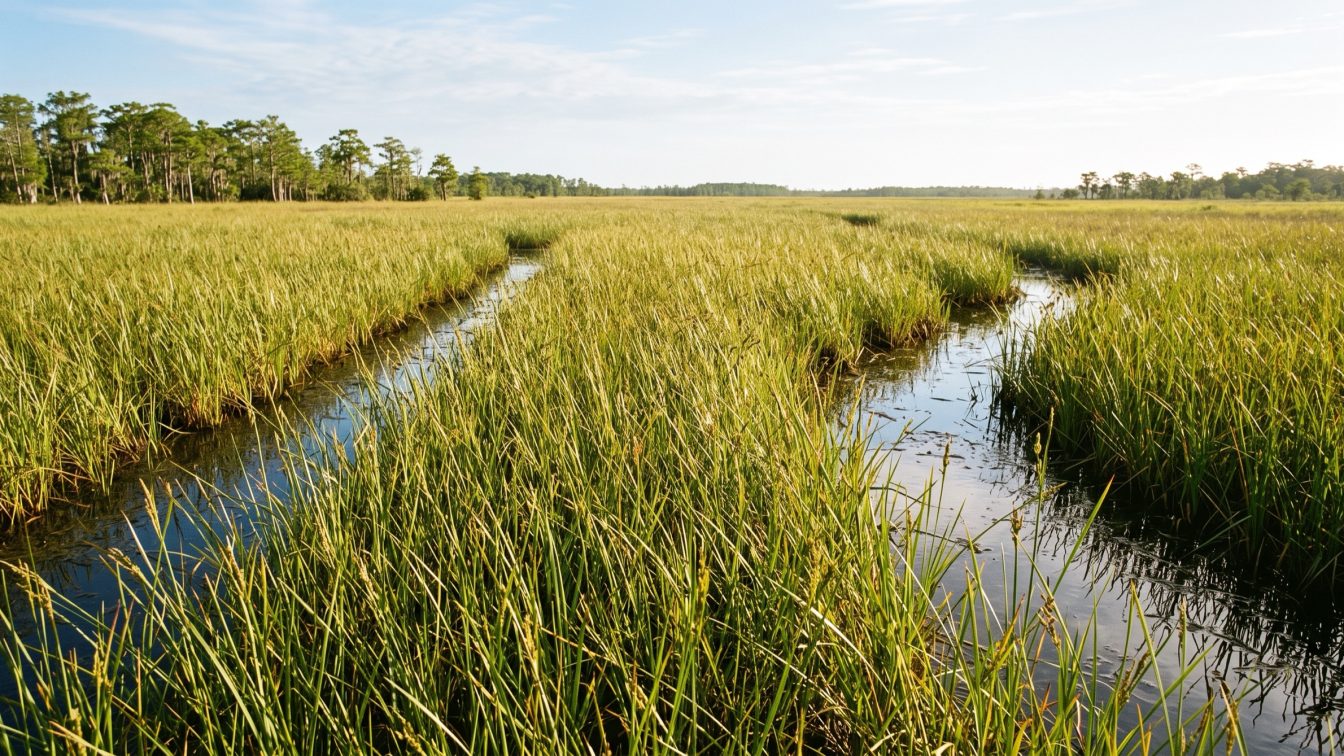
Table of contents
Summary of this article
- Florida and the U.S. Army Corps of Engineers finalized a deal on July 21, 2026 for the state to take over completing the Blue Shanty Flow-way, an Everglades restoration project, WUSF and WLRN reported.
- The Blue Shanty Flow-way is the plumbing that moves freshwater from Lake Okeechobee to the Everglades and into Florida Bay.
- Extreme drought conditions remained in the middle of the Everglades more than two months after the rainy season began.
- Without enough freshwater, Florida Bay can become too salty, risking seagrass die-offs, algae blooms, and fish kills.
- The Comprehensive Everglades Restoration Plan was approved by Congress in 2000, and its cost has risen from about $8 billion to more than $23 billion.
- Only one of the five treatment marshes built to scrub phosphorus from the water is meeting the strict pollution limit, the National Academies of Sciences noted.
- Col. Brandon Bowman, the Army Corps' Jacksonville district commander, called the deal "a tangible reduction in federal red tape."
- A watershed is source control at the ecosystem scale: the quality and quantity of water upstream shape the water that reaches communities and the coast downstream.
Water used to run south from Lake Okeechobee through the Everglades and into Florida Bay on its own. Drainage, development and a century of canals cut that off.
Florida and the Army Corps of Engineers signed a deal on July 21, 2026, handing the state control of building the Blue Shanty Flow-way. WUSF and WLRN reported the handover. The flow-way is the plumbing meant to restore a version of that flow.
Moving the water is the easier half. Getting it clean enough to move is the part still unsolved.
Who builds it changes; what it does does not
The state takes over constructing parts of the flow-way, under a memo approved earlier this year between the Corps and Governor Ron DeSantis. Speed is the stated purpose.
“This is a tangible reduction in federal red tape,” said Col. Brandon Bowman, district commander for the Corps’ Jacksonville district, at the signing north of Everglades National Park. “It streamlines permitting, accelerates project delivery, and allows us to deploy our resources faster and more efficiently.”
Division of labour is deliberate. Handing discrete construction to the state lets the Corps concentrate on the biggest earthworks, including a nearly 11,000-acre reservoir. A parallel deal moved that reservoir’s pumps to Florida too, so both tracks advance at once instead of one waiting on the other.
Restoring a flow the canals cut off
Lake Okeechobee is the headwaters, feeding the shallow sheet of water once called the River of Grass. Decades of drainage and canal-building redirected that southward flow away.
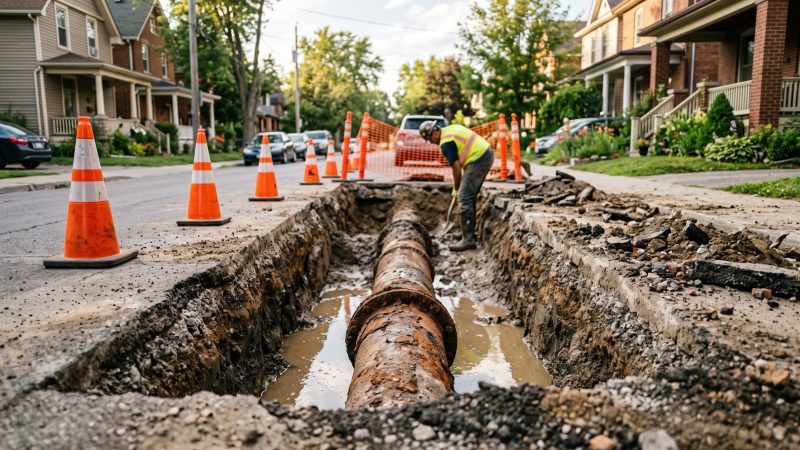
Engineers built the flow-way to restore part of it. Fresh water would reach marshes gone chronically dry and, eventually, the estuary at the state’s southern tip. Moving and cleaning that water was the central aim of the Comprehensive Everglades Restoration Plan when Congress approved it in 2000. Plumbing at landscape scale, and the country’s buried water pipe shows what happens when plumbing ages out.
Drought made it urgent
More than two months into this year’s rainy season, extreme drought still sat in the interior marshes where water naturally flowed. WUSF reported it, citing the National Weather Service. Rainfall was not the failure. Delivery was.
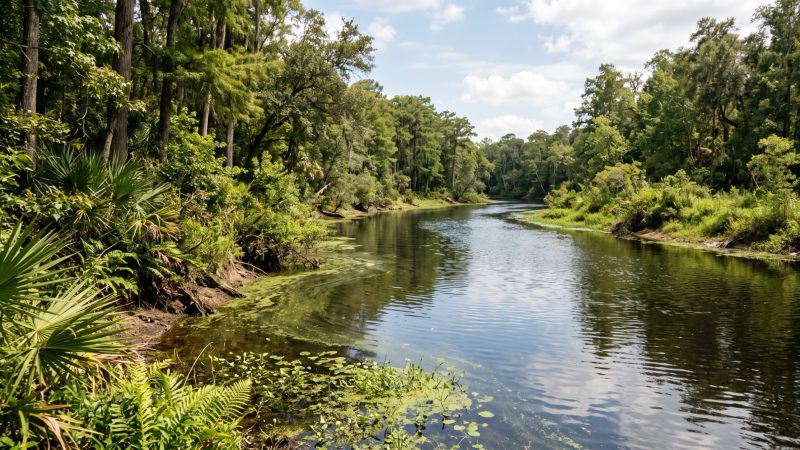
Florida Bay pays for it downstream, the same way Apalachicola Bay lost its oyster reefs when the freshwater balance moved. Without fresh water arriving, the bay turns too salty, and rising salinity brings seagrass die-offs, algae blooms and fish kills.
Everglades National Park superintendent Pedro Ramos named the signal. “I don’t want to alarm anybody, but the salinity levels at Florida Bay have been spiking. Those of us in the game have been paying attention to that,” he said at the signing. “This is exactly what we need to be doing in order to avoid having to be concerned about what happens downstream every single year when we have events like this, drought and water not getting to the right places at the right time.”
One treatment marsh in five meets the limit
Record funding has put the physical plumbing in place: reservoirs to hold water, and paths for it to run. The National Academies of Sciences noted as much in its 2024 progress report. Storage and movement are advancing.
Quality is lagging. Getting water clean enough to send into the Everglades remains a concern, the National Academies warned. A settlement between the state and EPA sets strict phosphorus limits. Phosphorus is the nutrient driving the algae blooms and vegetation changes that degrade the marsh.
Five treatment marshes were built to scrub it out. One meets the limit.
Delivering more water only helps if the water is clean. Water carrying excess phosphorus moves a pollution problem downstream rather than solving one, which makes the four marshes falling short as consequential as any reservoir. Statewide, more than half of assessed waters already fail standards.
From $8 billion to more than $23 billion
Congress approved the restoration plan in 2000 at roughly $8 billion. Expected cost now exceeds $23 billion, nearly tripling as the timeline stretched.
Delays trace to the ground and to politics both. A booming population, rapid development and shifting priorities reshaped the work, WUSF reported. Some projects got scrapped. Others were revised beyond recognition.
Recent acceleration runs the other way. Record funding sped things up, and the handoff deals are structured to keep it there by letting Florida and the Corps build in parallel.
Why a marsh reaches your tap
A watershed is the land draining to one body of water, and it behaves as a single connected system. Fresh water running south through the Everglades recharges the aquifers supplying drinking water across South Florida.
Starve that system, or foul it with nutrients, and the resource those communities draw from degrades. Nothing that happens in the marsh stays in the marsh.
Phosphorus shows source control at this scale most clearly. Excess nutrients enter upstream from agriculture and development. They drive the blooms and water-quality failures appearing downstream in the bay and in the lakes people live beside. Treating pollution at its origin through those marshes is the ecosystem version of a household filter at a sink. Four of the five have not closed that loop yet.
Florida now owns the build. Drought is sitting in marshes two months into a rainy season, and salinity is spiking in Florida Bay. A $23 billion plan approved in 2000 has one of five treatment marshes hitting its phosphorus limit. Water arriving dirty solves nothing, which makes the unglamorous half of this project the half that decides whether the rest of it works.
Sources
- WUSF and WLRN (Jenny Staletovich), July 21, 2026. Florida takes over critical Everglades plumbing project to accelerate work, including the deal for the state to complete the Blue Shanty Flow-way, the drought conditions, the Florida Bay salinity risk, quotes from Everglades National Park superintendent Pedro Ramos and Army Corps Jacksonville district commander Col. Brandon Bowman, and the parallel Everglades Agricultural Area reservoir pump agreement.
- National Academies of Sciences, 2024 progress report on Everglades restoration. On the infrastructure for water storage and movement falling into place, the ongoing concern over water clean enough to move into the Everglades, and the finding that just one of five phosphorus treatment marshes is meeting the limit.
- Comprehensive Everglades Restoration Plan, approved by Congress in 2000. On the goal of cleaning and moving water from Lake Okeechobee into Florida Bay and the cost growth from about $8 billion to more than $23 billion.
- Settlement between the State of Florida and the U.S. Environmental Protection Agency. On the strict limits set for phosphorus pollution in water moved into the Everglades.
Questions people ask
What did Florida and the Army Corps agree to?
WUSF and WLRN reported on July 21, 2026 that Florida and the U.S. Army Corps of Engineers finalized a deal for the state to take over and accelerate construction of the Blue Shanty Flow-way, a critical piece of Everglades restoration. The arrangement, approved earlier in the year in a memo of understanding between the Corps and Governor Ron DeSantis, shifts construction of parts of the project from the Corps to the state so the work can move faster.
What is the Blue Shanty Flow-way?
It is infrastructure that provides the plumbing needed to move freshwater from Lake Okeechobee to the Everglades and into Florida Bay. Lake Okeechobee is the headwaters of the system, and the flow-way is engineered to restore a version of the natural southward flow of water that decades of drainage and development cut off, delivering freshwater to marshes that have gone chronically dry.
Why is the project urgent right now?
Extreme drought conditions remained in the middle of the Everglades more than two months after the rainy season began, WUSF reported, citing the National Weather Service. Without freshwater reaching Florida Bay, the bay becomes too salty, which risks seagrass die-offs, algae blooms, and fish kills. Everglades National Park superintendent Pedro Ramos said salinity levels in Florida Bay have been spiking.
Why is clean water still a problem if the plumbing is being built?
Moving water and cleaning it are two separate challenges. The physical infrastructure to store and move water has advanced, but getting the water clean enough remains a concern, the National Academies of Sciences warned. A settlement between Florida and the EPA sets strict phosphorus limits, and of the five treatment marshes built to scrub phosphorus, only one is meeting the limit. Delivering water only helps if the water is clean.
How much does Everglades restoration cost?
The Comprehensive Everglades Restoration Plan was approved by Congress in 2000, and its cost has risen from about $8 billion to what is expected to exceed $23 billion. The increase reflects a stretched-out timeline shaped by a booming population, rapid development, and shifting politics, which led some projects to be scrapped and others to be dramatically revised.
Why does Everglades health matter for my water?
A watershed is a connected system: the quantity and quality of water upstream shape the water downstream. Freshwater flowing south through the Everglades recharges the aquifers that supply drinking water to South Florida, so a system starved of freshwater or fouled with excess phosphorus degrades the resource communities depend on. Treating pollution at its source, through the treatment marshes, is source control at the ecosystem scale.
Have questions about the environment inside your home?
Air quality, mold, EMF, light and water all shape how a house feels and how the people in it feel. Whatever your concern is, the first step is finding out what is there.
Our certified team of environmental professionals and advocates can help.