


More than half of Florida’s waterways fail, and enforcement keeps falling
More than half of Florida's assessed waters fail state standards, and enforcement actions now run at half their 2010 rate. A July 2026 report from PEER and Waterkeepers documented both.
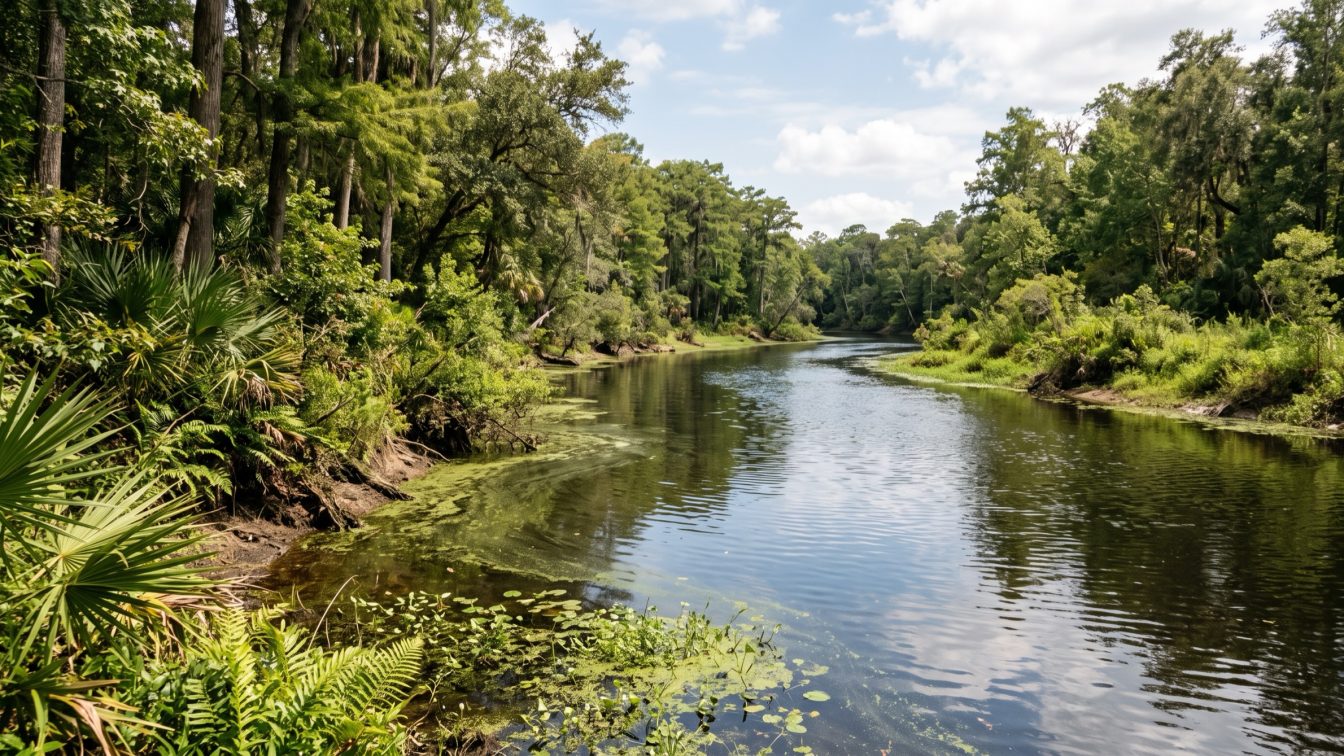
Table of contents
Summary of this article
- Just over 52% of the more than 4,200 water bodies assessed by the Florida Department of Environmental Protection (FDEP) fail to meet water quality standards, according to a July 2026 report by PEER and Waterkeepers Florida.
- For another 15% of assessed waters, there is not enough data to know whether standards are met.
- The main pollutants are excess nutrients, fecal bacteria, and low dissolved oxygen.
- In Central Florida, Lake Jesup, parts of Lake Apopka, and stretches of the Econlockhatchee River are all listed as impaired.
- FDEP enforcement actions fell from an average of 1,048 cases a year (1988 to 1995) to 431 a year under Governor Rick Scott (2011 to 2018).
- Enforcement reached 755 actions in 2025 but remains less than half of 2010 levels.
- Florida will ban land application of Class B biosolids by 2028, but Governor Ron DeSantis vetoed a bill regulating Class AA biosolids.
- Residents near impaired waters can reduce their own runoff, test private wells, and avoid contact during algae blooms.
Slightly over 52% of Florida’s assessed waterways fail to meet state water quality standards. Enforcement of the laws meant to prevent that sits at less than half its 2010 level.
Public Employees for Environmental Responsibility and Waterkeepers Florida put both numbers in one July 2026 report, built on 37 years of state enforcement data and FDEP’s latest statewide analysis. One trend feeds the other.
Anyone who drinks well water, swims, fishes or lives near a Florida lake pays for the gap.
Two in three, one way or another
FDEP assessed more than 4,200 water bodies. Slightly over 52% missed the standards. For another 15% the agency had too little data to judge at all.
Put those together and roughly two of every three assessed waters are either failing or unknown.
Some things improved. Coastal waters and streams have got somewhat cleaner. Estuaries and lakes went the other way, and they set the overall direction.
Nutrients, bacteria, and the oxygen they take
Three problems drive most impairments, according to FDEP: high nutrient concentrations, fecal bacteria, and low dissolved oxygen. They are connected.
Nutrients means nitrogen and phosphorus, mostly from fertilizer, septic systems, sewage and farm runoff. Small amounts do nothing. Excess feeds algae, and a large bloom blocks sunlight, then dies, then decomposes.
Low dissolved oxygen is what decomposition leaves behind. Fish need oxygen in the water, and when it drops you get fish kills and dead zones. Nutrient pollution both causes it and is measured by it. Excess nutrients are also what collapsed Apalachicola Bay’s oyster reefs.
Fecal bacteria, E. coli among them, signals human or animal waste: leaking septic tanks, sewage overflows, stormwater. High counts are why beaches close.
Central Florida waters already listed
Impairment is not spread evenly. Lake Jesup is impaired by nutrients. Parts of Lake Apopka are impaired by nutrients, with pesticides also found in fish tissue. Stretches of the Econlockhatchee River carry both E. coli and nutrients, according to FDEP.
Pesticide in Apopka fish is the detail worth holding onto, because it shows contamination climbing the food chain. Chemicals in water accumulate in fish, and whoever catches and eats one takes on the exposure.
Enforcement fell by more than half
Between 1988 and 1995, FDEP averaged 1,048 enforcement cases a year. After 2011, when Governor Rick Scott took office, that dropped to 431 a year through 2018. The PEER report says “the Scott administration favored development interests at the expense of environmental protections.”
Governor Ron DeSantis took office in 2019 and actions rose, from 371 in 2018 to 742 in 2020. Then they fell again, and have since climbed back from 579 in 2023 to 755 in 2025. Real recovery, partial recovery: “Enforcement actions initiated under Governor DeSantis are still less than half of what they were in 2010,” the report found.
Enforcement turns a written standard into an actual limit. Without it, a water quality rule is only a target.
Lisa Rinaman, riverkeeper at St. Johns Riverkeeper, put it plainly. “Those protections that have been in place, they’re too lax. They don’t go far enough,” she said. “And then, if you’re not enforcing it to ensure that what the model is telling you is what’s happening in reality … then it’s really not as good as the paper it’s written on.”
The biosolids gap
Treated sewage sludge, applied to land as fertilizer, is one nutrient source worth naming. Rain moves its nutrients into nearby water.
Lawmakers moved on it in 2026: a provision in the state farm bill outlaws land application of Class B biosolids by 2028. Class B is treated only enough to reduce pathogens and toxic chemicals, not remove them.
Then the state stepped back. DeSantis vetoed a separate bill creating protective rules for Class AA biosolids, the higher-treated grade. That gap “is just going to continue to add to our nutrient pollution problems that we’re seeing throughout the state of Florida,” Rinaman said.
Four ways it reaches you
Direct contact. Swimming or paddling in water with high fecal bacteria causes skin, ear and stomach infections. Blue-green algae blooms, driven by nutrients, release toxins that irritate skin and cause worse if swallowed.
Eating local fish. Contaminants build up in tissue over time, as the Apopka pesticide finding shows. Florida issues consumption advisories for a reason; check before you eat what you catch.
Private wells. Roughly one in ten Floridians drinks from one. Wells carry none of the regulation a public system does, and a shallow well near a failing septic tank or a farm field picks up nutrients and bacteria. Nitrate matters most for infants.
Your own yard. Fertilizer you spread, a septic system you skip, stormwater sheeting off your driveway. That is the part of the load you control directly.
What you can do
Test your well. Annually for bacteria and nitrate, and again after floods and hurricanes, which this state gets.
Maintain your septic system. Inspect every three to five years, pump when needed. A failing tank feeds nutrients and bacteria straight into nearby water.
Cut fertilizer. Follow local ordinances, never apply before heavy rain, and keep it away from shorelines and storm drains.
Check advisories first. FDEP and county health departments post bloom alerts, beach closures and fish consumption guidance.
Slow your own runoff. Rain gardens, native plants and permeable surfaces let the ground filter water before it leaves your property. Statewide, Florida has taken over a $23 billion effort to re-plumb the Everglades on the same principle.
Report pollution. Fish kills, illegal discharges, strange foam or color all go to FDEP. Enforcement partly depends on people noticing.
Read your water report. Your annual water quality report names what your own system is finding.
Why it matters now
Tourism, fishing, agriculture and property values all rest on clean water here. “It’s alarming for a state like Florida, where everything depends on clean water,” Rinaman said.
Standards exist. More than half of assessed waters fail them. Enforcement, the tool that closes that gap, runs at less than half its 2010 level. Until that changes, protection falls partly to residents making careful choices at home.
FDEP was asked to comment on the report’s findings and did not respond before publication.
Sources
- WUSF / Central Florida Public Media. A majority of Florida waterways are polluted. But environmental enforcement is lacking (2026) (July 31, 2026):
- PEER and Waterkeepers Florida, 2025 Enforcement Report (July 2026):
- Florida Department of Environmental Protection, Integrated Water Quality Assessment for Florida:
- St. Johns Riverkeeper:
- Florida Senate, Bill Summary (SB 1245, 2026):
Questions people ask
How many of Florida's waterways are failing water quality standards?
Just over 52% of the more than 4,200 water bodies assessed by the Florida Department of Environmental Protection fail to meet standards, according to a July 2026 report by PEER and Waterkeepers Florida. For another 15%, there is not enough data to determine their condition.
What pollutes Florida's waterways the most?
Three problems dominate: excess nutrients (nitrogen and phosphorus from fertilizer, septic systems, and runoff), fecal bacteria such as E. coli, and low dissolved oxygen. Nutrients feed algae blooms, and decomposing algae drive oxygen levels down.
Which Central Florida waters are impaired?
FDEP lists Lake Jesup as impaired by nutrients, parts of Lake Apopka as impaired by nutrients with pesticides in fish tissue, and stretches of the Econlockhatchee River as impaired by E. coli and nutrients.
How much has Florida's environmental enforcement declined?
FDEP averaged 1,048 enforcement cases a year between 1988 and 1995. That fell to 431 a year under Governor Rick Scott (2011 to 2018). Actions reached 755 in 2025 but remain less than half of 2010 levels.
What is happening with biosolids in Florida?
A 2026 farm bill provision will ban land application of Class B biosolids, treated sewage sludge, by 2028. However, Governor DeSantis vetoed a separate bill that would have regulated higher-treated Class AA biosolids.
What can I do to protect myself and my local water?
Test private wells annually for bacteria and nitrate, maintain your septic system, limit fertilizer use, check algae and fish advisories before swimming or fishing, manage stormwater runoff on your property, and report pollution to FDEP.
Have questions about the environment inside your home?
Air quality, mold, EMF, light and water all shape how a house feels and how the people in it feel. Whatever your concern is, the first step is finding out what is there.
Our certified team of environmental professionals and advocates can help.