


America loses 6 billion gallons of water a day from leaking pipes
A water main breaks somewhere in the United States every 2 minutes, and much of the buried pipe is 50 to 100 years old. Utilities lose treated drinking water faster than crews can replace the system.
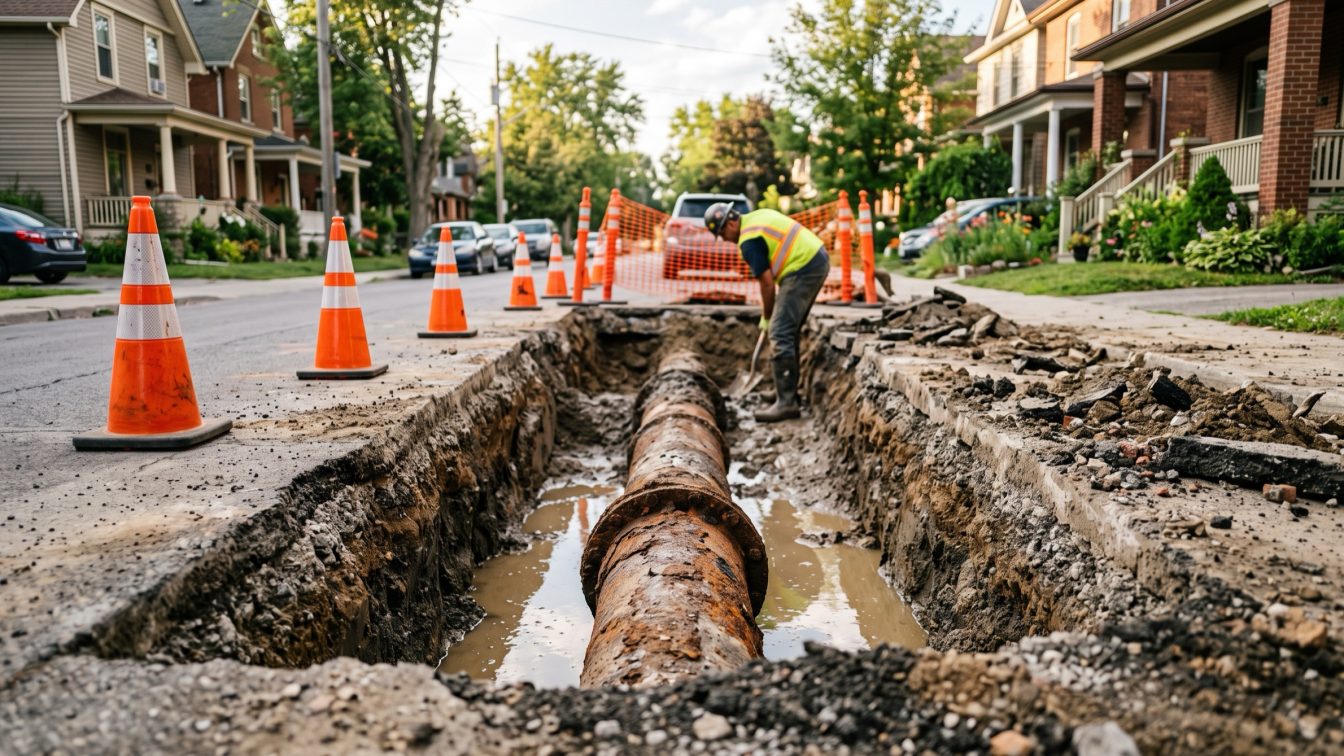
Table of contents
Summary of this article
- The Environmental Protection Agency estimates US water systems lose about 6 billion gallons of treated drinking water every day to leaks, breaks, and aging pipes.
- A water main breaks somewhere in the United States roughly every 2 minutes, according to the American Society of Civil Engineers, adding up to an estimated 250,000 to 300,000 breaks a year.
- Much of the buried infrastructure was installed 50 to 100 years ago, and the American Society of Civil Engineers graded US drinking water infrastructure a C-minus in its 2021 report card.
- The Environmental Protection Agency estimates US water systems need $625 billion in investment over 20 years to maintain and expand service.
- Low pressure from a break or leak can pull groundwater, soil, and contaminants into the pipe, which is why utilities issue boil water advisories after main breaks.
- Water scarcity compounds the problem. The federal government projects that 40 of 50 state water managers expect shortages in some portion of their states over the coming years.
- You cannot repair the system, but a certified filter, an emergency water supply, and attention to your utility's reports lower your risk at the tap.
Six billion gallons of treated drinking water disappear into the ground every day, by the EPA’s estimate. Utilities paid to clean it, pumped it, and lost it through leaks and cracks in pipes nobody can see.
Age explains most of it. Much of the country’s buried pipe went in 50 to 100 years ago, the American Society of Civil Engineers reports, and some cast iron mains still carrying water were laid more than a century back. Its 2021 report card graded US drinking water a C-minus.
That grade lands on your tap two ways: whether water arrives, and whether it is safe when it does.
The scale of the losses
A main breaks somewhere in the United States roughly every 2 minutes. Across a year that runs to between 250,000 and 300,000 breaks, each one spilling treated water and cutting service.
Breaks are the visible part. Leaks that never rupture drain the system quietly, seeping from joints and corroded sections across roughly 2.2 million miles of underground pipe. Both together make the 6 billion gallons.
Someone pays for that water. Utilities produce it and ratepayers fund it, to the tune of an estimated $2.6 billion a year vanishing underground.
Why the pipes are failing now
Timing is not coincidence. American cities built their water systems in waves, expanding hard in the late 1800s, the 1920s, and the decades after World War II.
Pipe lasts 75 to 100 years depending on the material. Everything laid during those booms is reaching the end of its life at once, and failures are arriving faster than crews can dig.
Replacement never caught up. Restoring and expanding buried drinking water pipe will cost above $1 trillion over 25 years, the American Water Works Association estimates, and EPA’s most recent needs survey sets the 20-year figure at $625 billion. Spending has not come close, which is why that C-minus barely moves from one report card to the next. Money does exist at scale in places: a $5 billion program cleans the water 40 million people drink.
A broken main can pull contamination in
Supply is only half the problem. Pressure is the other half.
Water travels the distribution system under positive pressure, pushing outward toward homes and keeping everything else out. Break a main, or open a large leak, and pressure in that stretch can fall hard. Fall far enough and flow briefly reverses, so groundwater, soil and whatever sits around the pipe get pulled in through the same cracks that were leaking water out.
Boil water advisories exist for that moment. The CDC advises a rolling boil for at least one minute before drinking, cooking or brushing teeth, to kill anything that entered during the pressure drop.
Old pipe raises the risk a second way. Unlined cast iron and galvanized steel corrode from the inside over decades, roughening the wall into a surface where biofilm grows and sediment settles. A break or a sudden change in flow shakes those deposits loose and sends them downstream to whoever is drinking.
Pressure loss is a failure mode in its own right, which is why a line that loses pressure stops pushing out and starts pulling in.
Scarcity makes every lost gallon count
Aging pipe is one strain. Shortage is another, and they compound.
Water managers in 40 of 50 states told the Government Accountability Office they expected shortages somewhere in their state under average conditions. The West feels it first: the Colorado River supplies about 40 million people across seven states and Mexico and irrigates millions of acres, and it has run under shortage conditions while Lake Mead and Lake Powell hit record lows.
Tighten supply and a leaking pipe costs more. A system losing 6 billion gallons a day is throwing away water that dry regions cannot spare, and federal regulators now want to cut 3 million acre-feet from three states. Utilities reaching for more distant or dirtier sources put further strain on treatment, and new chemicals reach commerce faster than plants can remove them.
Three things decide it at your tap
Three things decide whether the system is working for a household: whether water arrives, whether it is safe, and what it costs.
Main breaks cut service for hours or days while crews repair. Advisories follow many of them, forcing households to treat water before use. And the bill for repairing aging pipe lands on ratepayers, which is why water rates in many cities have outrun inflation for a decade.
Nobody digs up the main under their own street. What a household controls is the last stretch of the path and its own readiness for the failures.
Control the tap, prepare for the system
Filter your drinking water. A filter certified to NSF/ANSI Standard 53 cuts lead and much of what corroded pipe releases. Reverse osmosis certified to Standard 58 goes broader. Change cartridges on schedule, because a spent filter does nothing.
Keep an emergency supply. FEMA recommends at least one gallon per person per day for three days, and two weeks where you can manage it. That covers breaks, advisories and everything else.
Follow a boil water advisory exactly. Rolling boil, one full minute, before drinking, cooking or brushing teeth. Bottled or boiled water until it lifts.
Flush the pipes afterward. Run cold taps several minutes once service returns, to clear sediment and discolored water that entered during the pressure change.
Read your annual water quality report. Fertilizer is a large part of what ends up in it, and a war half a world away is cutting the runoff. Every community system publishes a Consumer Confidence Report listing what was detected. It tells you where your system stands.
Track your utility’s plans. Capital improvement plans and lead service line inventories show whether the pipe near you is scheduled for replacement, and when. Some systems are already working against a tighter lead limit.
Use water efficiently. Florida has failed 52% of its waterways while enforcement ran at half its 2010 rate. Fixing household leaks and fitting efficient fixtures eases demand on a strained system. EPA’s WaterSense program puts household leaks at nearly 1 trillion gallons wasted nationwide each year, and that share is one households can cut directly.
Six billion gallons a day, a break every 2 minutes, and a $625 billion bill the country has not paid. You cannot fix the main under the street. Filter what comes out of the tap, keep water on hand for the days it stops, and know what your utility is doing with the pipe under your yard.
Sources
- Environmental Protection Agency. Drinking Water Infrastructure Needs Survey and Assessment, on the 6 billion gallons lost daily and the $625 billion investment need.
- American Society of Civil Engineers. 2021 Infrastructure Report Card, drinking water section, on the C-minus grade, water main break frequency, and cost of lost water.
- Centers for Disease Control and Prevention. Guidance on boil water advisories and safe water during emergencies.
- Government Accountability Office. Report on freshwater supply and state water manager expectations of shortages.
- Federal Emergency Management Agency. Emergency water supply recommendations for households.
Questions people ask
How much water does the US water system actually lose?
The Environmental Protection Agency estimates that US water systems lose about 6 billion gallons of treated drinking water every day through leaks, breaks, and aging pipes. The American Society of Civil Engineers reports this lost water costs an estimated $2.6 billion a year, since it is water utilities already paid to treat and pump.
Why are so many water mains breaking?
Age. Much of the buried water infrastructure in the US was installed 50 to 100 years ago, and water pipes generally last 75 to 100 years. The pipes installed during past building booms are reaching the end of their lifespans at the same time, producing a wave of failures. The American Society of Civil Engineers estimates a main breaks somewhere in the country every 2 minutes.
Why do water main breaks cause boil water advisories?
Because of pressure. Drinking water flows under positive pressure that keeps contaminants out. When a main breaks, pressure can drop sharply, and the flow can briefly reverse, pulling groundwater, soil, and contaminants into the pipe through the same cracks that leak water out. The Centers for Disease Control and Prevention advises boiling water for at least one minute to kill any pathogens that may have entered.
Is my tap water still safe with all this aging infrastructure?
US drinking water is treated to federal safety standards, and most of the time it reaches homes safe to drink. The risk rises during specific events like main breaks and pressure loss, when contaminants can enter the system. A filter certified to NSF/ANSI Standard 53, plus following any boil water advisories, protects you at the point of use.
How does water scarcity connect to infrastructure problems?
The two compound each other. The Government Accountability Office reported that water managers in 40 of 50 states expected shortages in some part of their states in coming years. When supply tightens, water lost to leaking pipes matters more, and a system losing 6 billion gallons a day is discarding water that scarcity-stressed regions cannot afford to waste.
What can I do about a problem this big?
You cannot repair the system, but you can control your tap and prepare for interruptions. Filter your drinking water with a certified unit, keep an emergency supply of at least one gallon per person per day as the Federal Emergency Management Agency recommends, follow boil water advisories, and read your utility's annual water quality report. Fixing household leaks also reduces demand on a strained system.
Have questions about the environment inside your home?
Air quality, mold, EMF, light and water all shape how a house feels and how the people in it feel. Whatever your concern is, the first step is finding out what is there.
Our certified team of environmental professionals and advocates can help.