


Apalachicola Bay lost almost all of the oyster reefs it once had
Apalachicola Bay once produced more than 90% of Florida's oysters, but its reef base has collapsed from 2,000 acres to under 100. Four reefs reopened this January for the first harvest since 2020.
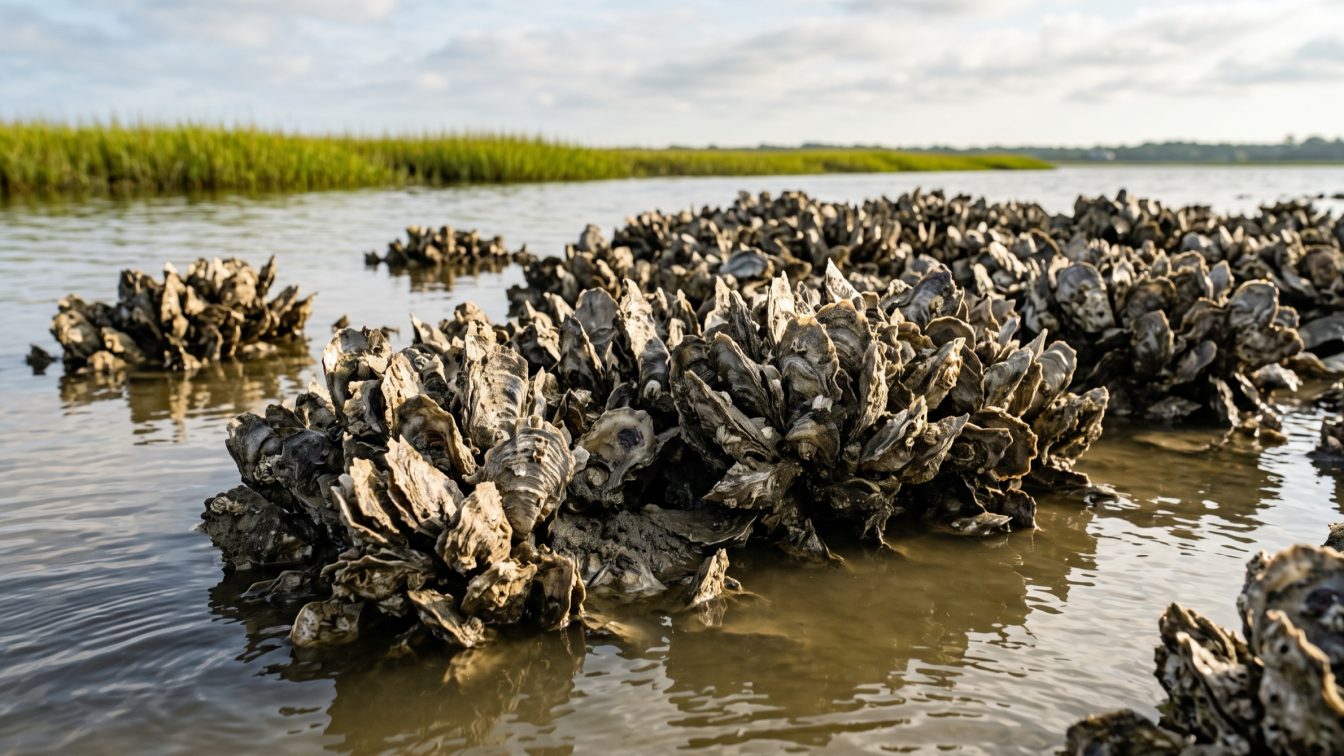
Table of contents
Summary of this article
- Apalachicola Bay's oyster reefs shrank from 2,000 acres to under 100 acres, and the fishery collapsed in 2013 before the bay was closed to harvesting in 2020, according to WUSF/WFSU reporting from the News Service of Florida.
- The bay was once a powerhouse, supplying more than 90% of Florida's oysters and 10% of the oysters sold nationally before decades of decline.
- Florida wildlife officials are praising the restoration. FWC reopened four reefs for a two-month season starting January 1, 2026, with Commissioner Joshua Kellam calling the past year "a huge success."
- The state is funding source control. The 2026-2027 budget includes $15 million for oyster reefs statewide, $11 million of it for Apalachicola Bay; the prior year added $5 million for sewage and stormwater projects to protect the bay.
- Recovery is measured and cautious. The East Hole reef failed its harvest threshold and will close next season, and harvest bags were cut from 4,726 to 2,560 to protect the rebound. A single adult oyster can filter up to 50 gallons of water a day.
Apalachicola Bay used to feed the country. This single stretch of water on Florida’s Panhandle once supplied more than 90% of Florida’s oysters and 10% of all the oysters sold nationally. It was one of the most productive oyster fisheries in the United States.
Then it collapsed. The bay’s oyster reefs shrank from 2,000 acres to less than 100. In 2013, the fishery fell apart. By 2020, the bay was closed to harvesting entirely.
Now there are real signs of a comeback. Florida wildlife officials voiced support this week for a restoration effort that has reopened parts of the bay to harvesting for the first time in years, backed by $11 million in new state funding aimed specifically at Apalachicola Bay. WUSF, drawing on WFSU and the News Service of Florida, reported the update on August 6, 2026.
For anyone who eats oysters, lives on the Gulf coast, or cares about the health of Florida’s water, this is a story worth understanding. It’s a live case study in a core building-biology idea: the most effective way to protect water quality is to rebuild the natural system that keeps water clean at its source, rather than treat the pollution after it spreads.
How a fishery falls apart
To understand the recovery, you have to understand what broke. The bay’s decline wasn’t one disaster. It was a stack of exposure pathways, separate routes of harm, hitting at once. Florida has taken over a $23 billion effort to re-plumb the Everglades on the same logic.
Reef material removed for roads. For years, the hard reef itself was hauled out and ground up to build roads. This is the clearest source-control failure in the whole story. Oysters need a hard surface to grow on, and that surface is the reef built by generations of oysters before them. Remove it, and you remove the foundation the next generation needs. You don’t just take oysters; you take away the place oysters come from.
Damaging hurricanes. Powerful storms physically tore at what reef remained, smothering it with sediment and breaking apart its structure.
Disease. Illness swept through the weakened population, killing oysters faster than they could reproduce.
Poor water quality. Excess nutrients and pollution degraded the water the oysters depend on, adding chronic stress on top of the acute damage.
Behind all of it sits a deeper source problem: freshwater. Apalachicola Bay is at the southern end of the Apalachicola-Chattahoochee-Flint river system, which starts up in northern Georgia. Oysters need the right mix of fresh and salt water. When too much freshwater is used upstream before it ever reaches the bay, the balance shifts and the estuary suffers. Florida argued in court that Georgia was using too much of that shared water, but in 2021 the U.S. Supreme Court rejected the lawsuit. The upstream source of the problem, in other words, remains unresolved.
Why oysters are worth rebuilding
Here’s the number that explains why a state would spend millions to bring back a shellfish: a single adult oyster can filter up to 50 gallons of water a day. The same coastal water they filter is the water that carries red tide toxins ashore.
That’s the heart of it. An oyster feeds by pulling water across its gills and straining out suspended particles and algae. In doing so, it removes exactly the material that clouds and degrades an estuary. Multiply 50 gallons by the millions of oysters on a healthy reef, and you have a natural water-treatment system running around the clock, for free.
This is source control in its purest form. Instead of building a treatment plant to clean water after it’s dirty, you restore the organisms that keep it clean in the first place. And oysters do double duty: their reefs are hard, complex habitat that shelters fish, crabs, and countless other species. A restored reef isn’t just a filter, it’s a nursery and a foundation for the whole coastal food web.
So when the reef shrank by more than 95%, the bay didn’t just lose a crop. It lost its filter and its nursery at the same time. Rebuilding the reef rebuilds both.
The measurable comeback
What makes this restoration credible is that it’s tracked in hard numbers, not hope. Recovery here is measured in acres and bags.
FWC agreed to a two-month oyster season across four reefs in the bay, starting January 1, 2026, with the next season set to run from October 1 through February 28, 2027. That reopening, after the bay had been closed for years, is the visible payoff.
“We’ve opened up something that has been closed for six years, to now have it in a restorative fashion where people are now able to get back out on the water,” Commissioner Joshua Kellam said, calling the past year’s work “a huge success.” FWC Chairman Rodney Barreto told staff to keep going: “Business as you are doing it is appropriate. It sounds like it is going well.”
But the numbers also show restraint, which is exactly what you want from a system still healing. The plan for the upcoming season is to distribute 2,560 bags for oyster collection to commercial and recreational harvesters, down sharply from 4,726 bags used in the past January-February timeframe. Recreational harvesters accounted for just 52 bags last season.
Cutting the harvest nearly in half is a deliberate threshold. A recovering reef can only give up so much before it stalls. By capping bags, managers keep enough oysters in the water to keep filtering, reproducing, and rebuilding the reef structure. Policy does not always follow the numbers: Florida sees 25 to 30 shark bites a year and banned the wrong thing.
There’s honesty in the data, too. One of the four reopened reefs, known as East Hole, failed to produce the anticipated harvest threshold last season and will be closed for the upcoming one. As biologist Morgan Eason explained, that means fewer open reefs and lower overall harvest. That’s not a failure of the plan, it’s the plan working. A measurable threshold showed one area wasn’t ready, so it gets protected instead of pushed.
Following the money: fixing the source
The funding tells you where the state believes the real fix lies. The 2026-2027 budget includes $15 million to restore Florida’s oyster reefs, of which $11 million is dedicated to Apalachicola Bay.
Just as telling is what the prior year’s budget did. Alongside $12.5 million for reef restoration, it directed $5 million to the Department of Environmental Protection to reach financial-assistance agreements with local governments on sewage facilities and stormwater projects to help protect the bay. Stopping the damage can be enough on its own: seagrass returned when a hurricane closed a causeway to jet skis.
That $5 million is the quiet star of the story from a building-biology standpoint. Rebuilding reefs addresses the habitat. But upgrading sewage and stormwater systems addresses the pollution at its source, stopping nutrients and contaminants before they reach the water and undo the reef work. Restoring oysters while still flooding the bay with poor-quality water would be like mopping the floor with the tap still running. Doing both is genuine source control: fix the filter and cut what’s fouling the water.
What’s next, and what it means for you
Momentum is building. TJ Saunders, a charter fishing captain, called the work “promising” and urged the state to expand it west of the Saint George Island Bridge, since restoration so far has focused east of it. “We have a vast fishery and habitat space that is in need of oyster restoration,” he said.
You don’t have to live on the Panhandle to take something practical from Apalachicola’s story:
Public access to the water is contested on this coast too, where one marina must keep 90% of its slips public and residents say none are. Runoff stresses a reef before anything else does, and a toxic tire chemical has now turned up in Tampa’s Hillsborough River. Support reef restoration where you are. Oyster and living-shoreline projects rebuild the natural filter that keeps coastal water clean at the source. It’s the most durable water-quality fix there is.
Cut nutrient runoff from your property. The poor water quality that helped sink this fishery starts on land. Follow local fertilizer bans, avoid fertilizing before rain, and keep vegetated buffers along waterways. Every pound of nitrogen kept out of the water is one less stressor on a recovering reef.
Back the unglamorous infrastructure. Sewage and stormwater upgrades don’t make headlines, but they stop pollution before it reaches the bay. Supporting them is source control in action.
Choose sustainably sourced oysters. A recovering fishery needs demand that doesn’t outpace its rebound. Cautious harvest limits, like the drop from 4,726 to 2,560 bags, only work if consumers respect them.
Apalachicola Bay lost its reefs over decades, one load of removed reef material and one polluted rainfall at a time. Rebuilding them is slower, careful work, measured in acres restored and bags harvested. But the oysters are back on four reefs, the water has millions of tiny filters returning to work, and the state is finally funding both the reef and the water flowing into it. That’s a bay worth betting on. The same nutrient pollution that feeds Florida’s algae blooms works against the bay, and Lake Okeechobee shows what that looks like at scale.
Sources
- WUSF/WFSU, News Service of Florida. Florida wildlife officials applaud oyster restoration efforts in Apalachicola Bay (2026) (August 6, 2026):
Questions people ask
How important was Apalachicola Bay to the oyster industry?
It was one of the most productive oyster fisheries in the country. According to WUSF/WFSU, the bay once supplied more than 90% of Florida's oysters and 10% of all the oysters sold nationally before decades of decline.
Why did Apalachicola Bay's oyster fishery collapse?
Several threats hit at once: reef material was removed to build roads, damaging hurricanes struck, disease spread through the population, and poor water quality degraded the estuary. The oyster reef shrank from 2,000 acres to less than 100 acres. The fishery collapsed in 2013, and the bay was closed to harvesting in 2020. Upstream water use in the shared Apalachicola-Chattahoochee-Flint river system also contributed.
How do oysters help water quality?
An oyster feeds by filtering water across its gills, straining out suspended particles and algae. A single adult oyster can filter up to 50 gallons of water a day. A full reef acts as a continuous, natural water-treatment system while also providing habitat for fish, crabs, and other species.
Is the restoration working?
Florida wildlife officials say yes. FWC reopened four reefs for a two-month season starting January 1, 2026, after years of closure, and Commissioner Joshua Kellam called the past year "a huge success." Recovery is cautious, though, the East Hole reef failed its harvest threshold and will close next season, and harvest bags were cut from 4,726 to 2,560.
How much is Florida spending on oyster restoration?
The 2026-2027 state budget includes $15 million for oyster reefs statewide, with $11 million dedicated to Apalachicola Bay. The prior year's budget included $12.5 million for reef restoration plus $5 million for sewage and stormwater projects to help protect the bay.
What can I do to help coastal water quality?
Support oyster and living-shoreline restoration, reduce nutrient runoff by following fertilizer rules and keeping vegetated buffers along waterways, back sewage and stormwater infrastructure upgrades, and choose sustainably sourced oysters so demand doesn't outpace a recovering fishery.
Have questions about the environment inside your home?
Air quality, mold, EMF, light and water all shape how a house feels and how the people in it feel. Whatever your concern is, the first step is finding out what is there.
Our certified team of environmental professionals and advocates can help.