


A mega-yacht marina is planned over Biscayne Bay’s last seagrass flats
Miami-Dade has filed for a marina with 325 slips and dry storage for 500 boats on a stretch of bay that has already lost most of its seagrass. It would be the county's largest.
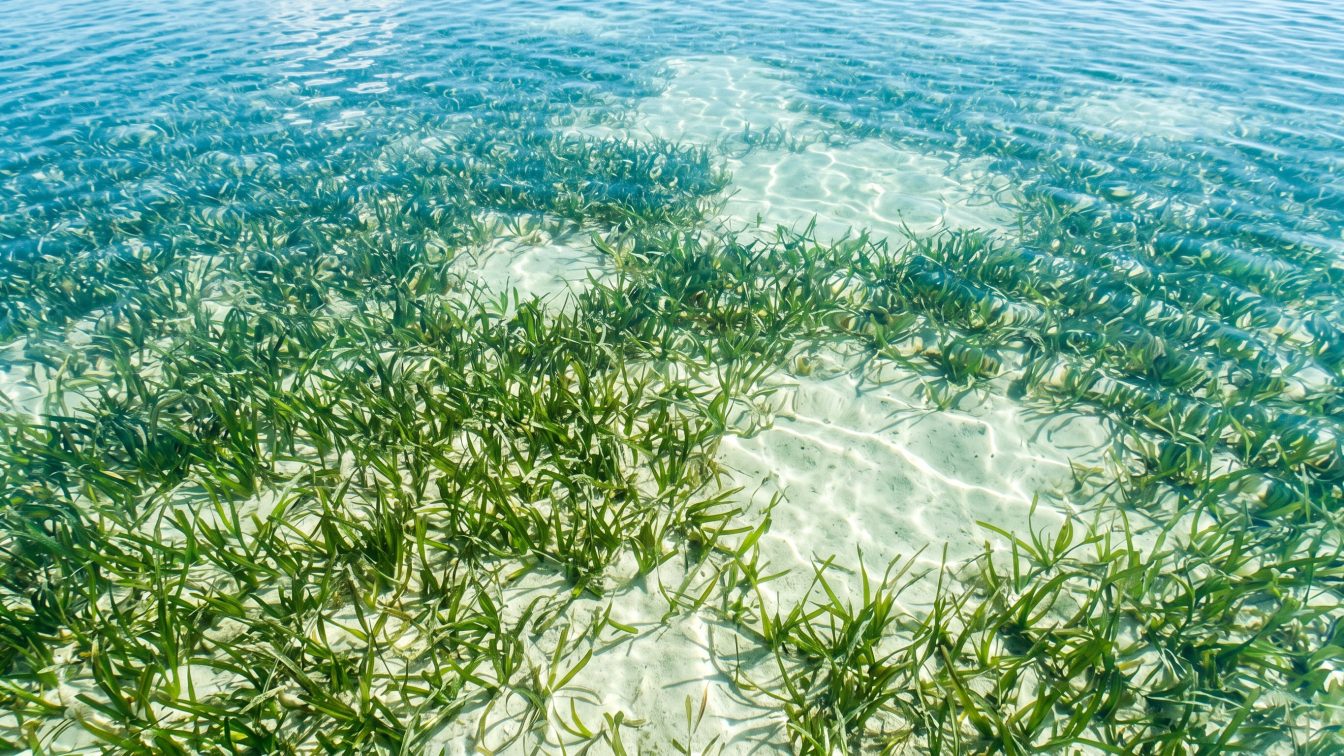
Table of contents
- Seagrass is the bay’s water filter, and most of it is gone
- The exposure pathways: fuel, sewage, and stirred-up sediment
- Regulators sent back a six-page list of what is missing
- Whether the project would affect protected wetlands
- Wildlife health: manatees, coral, and a fishery worth protecting
- The bay may be the wrong place for this
- The money and the vote
- What a marina over the flats would cost the bay
Summary of this article
- Miami-Dade County quietly filed a state permit for a 325-slip marina at the old Seaquarium. The plan also includes dry storage for about 500 boats and could rank as the county's largest marina, according to WUSF/WLRN reporting.
- The site sits over Biscayne Bay flats that have already lost 70% to 90% of their seagrass in the last decade, the natural habitat and water filter that supports sea turtles, bonefish, lobsters, and wading birds.
- State regulators flagged a six-page list of missing details. The Florida Department of Environmental Protection asked for information on wetland impacts, coral damage, dredging, sewage pump-out rules, fuel-spill plans, and water quality.
- The plan carries direct wildlife risks. It includes a fuel dock over 19,000 square feet in a bay where boat collisions are the leading cause of manatee death, three were killed by boats last year.
- The financial and review picture raised concerns. Developer David Martin would receive 95% of marina slip profits, and county environmental staff had not yet reviewed the marina plans when the story published.
Miami-Dade County quietly submitted a state permit application for a 325-slip marina at the shuttered Miami Seaquarium on Virginia Key. If built, it could rank as the county’s largest marina. It would sit over a stretch of Biscayne Bay that has already lost most of its seagrass.
The plan is big. Alongside the 325 wet slips, a dry stack would store roughly 500 more boats. Nearly 90 slips could fit yachts over 80 feet long, with room for vessels up to 200 feet. A fuel dock would cover more than 19,000 square feet. A wave break that doubles as a fishing pier would curve around the piers, stretching more than four football fields in length.
For anyone who lives near Biscayne Bay, fishes it, or drinks water and breathes air along Florida’s coast, the zoning fight is only the surface. Underneath sits the health of the water at the edge of the built environment, and a natural filter already disappearing. WUSF and WLRN reporter Jenny Staletovich detailed the plan on July 13, 2026.
Seagrass is the bay’s water filter, and most of it is gone
In the last decade, Biscayne Bay has lost between 70% and 90% of its flats. Those flats once made it a haven for sea turtles, bonefish, lobsters and wading birds.
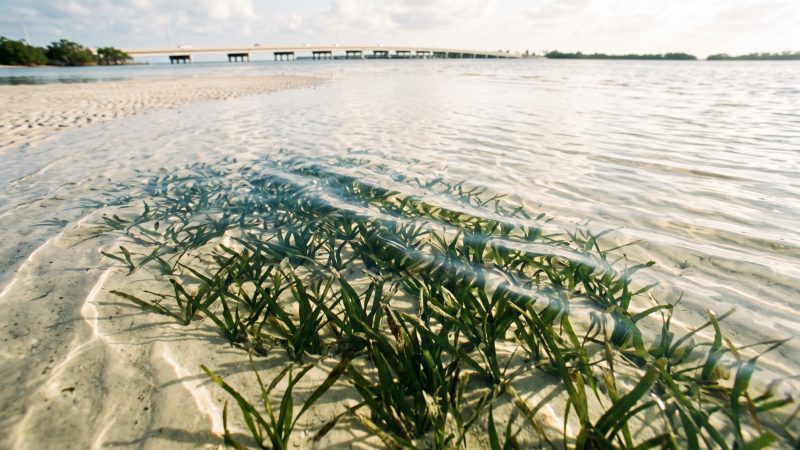
Seagrass does more than shelter wildlife. It works like a living water-treatment system. The blades slow moving water so suspended sediment settles out instead of clouding the bay. The roots hold that sediment in place. And the plants pull up nutrients, the same nitrogen and phosphorus that, in excess, feed harmful algae blooms.
Source control, the building-biology principle, applies here to an entire estuary. Rather than cleaning polluted water after the fact, healthy seagrass keeps it clean at the source. Remove the filter and the meadow is the smaller loss. The water stops being clear enough for the seagrass itself to survive, which is how these systems collapse.
A 2019 NOAA study warned that Biscayne Bay was in danger of a “regime shift”: a clear, seagrass-dominated bay flipping into a murky, algae-dominated one. Reversing that is very hard. Building a busy marina over the remaining flats pushes the system in exactly that direction.
The exposure pathways: fuel, sewage, and stirred-up sediment
A marina of this size introduces several routes for pollution to enter the water and, from there, the coastal environment people live in.
Fuel. The proposed fuel dock covers more than 19,000 square feet. Every fueling operation carries the risk of spills and drips. Marine fuel contains hydrocarbons and additives toxic to fish, invertebrates and the microscopic life at the base of the food web. State regulators specifically asked for a management plan covering fuel spills, because there was not one in the application.
Sewage. Boats generate wastewater. Without strict pump-out rules and enforcement, that waste can enter the bay directly. This matters in a county already spending billions to remove septic tanks that leak nutrients and bacteria into Biscayne Bay. Regulators flagged the missing sewage pump-out plan as one of their concerns.
Sediment. Building docks, piers, and a wave break, and dredging to make room for deep-draft yachts, stirs up bottom sediment. That sediment clouds the water, blocking the sunlight seagrass needs, and can carry buried contaminants back into the water column. The permit application did not include the dredging details regulators wanted.
Each of these is an exposure pathway that reaches beyond the marina itself. Contaminants and excess nutrients in bay water reach the fish people catch and eat, and the water where children swim. They shape the coastal environment around shoreline homes.
Regulators sent back a six-page list of what is missing
Public access is its own fight on this coast, where one marina is required to keep 90% of its slips public and residents say none are. The Florida Department of Environmental Protection did not approve the plan. It responded with a six-page list of omissions and questions.
Among the gaps regulators identified:
Whether the project would affect protected wetlands
Whether the county considered alternative designs posing less risk to seagrass and other bay-bottom wildlife
How much coral might be damaged
Details about dredging
A dock management plan covering sewage pump-outs and fuel spills
How boats navigating the narrow channel around the flats might be affected
Potential impacts to water quality
That last point is striking given the county’s own priorities. Miami-Dade is spending billions to remove septic tanks polluting the bay, yet the water-quality analysis was not part of the marina application.
There is also a process concern. County environmental staff typically oversee work affecting the bay. They had not weighed in on the marina plans, officials said, though they are part of the lease negotiations. And a county shoreline advisory committee that normally reviews development along Biscayne Bay had not reviewed the plans.
Wildlife health: manatees, coral, and a fishery worth protecting
The plan’s animal-health stakes are concrete. Last year, three manatees were killed by boats in Biscayne Bay, where boat collisions remain the leading cause of manatee death. More slips for more boats, especially large ones, means more traffic in waters manatees use. The county said its building department will decide whether the plans comply with the county’s Manatee Protection Plan. That plan relies on existing zoning to gauge motorboat density.
Then there is the fishery. Capt. Bob Branham, a champion fishing guide who retired after 50 years working primarily in Biscayne Bay, called the marina “a terrible idea.” He described waters near the Seaquarium as a refuge where bonefish tailed along the beach and tarpon gathered in the deeper channel. “You put all these big yachts in there,” he said, “they might as well dredge those flats right now because they’re going to be wiped out.”
The bay may be the wrong place for this
A recurring point from bay advocates is that Biscayne Bay is simply not built for mega yachts.
“The reason we don’t have a mega yacht industry in Biscayne Bay and it’s in Fort Lauderdale is they’re too deep,” said Laura Reynolds, policy advisor for Friends of Biscayne Bay. “As much as we may want to have deep wet slips, that’s not Biscayne Bay. It’s a shallow beautiful estuary and we can’t change that.”
Making a shallow estuary deep enough for 200-foot boats means dredging, the very activity that destroys seagrass and stirs up contaminated sediment.
Dave Doebler, co-chair of the Biscayne Bay Marine Health Coalition, framed the better question. Rather than asking how the project avoids harming the bay, he asks how it could become a net benefit. Regenerative design sets that standard. Development at the water’s edge should leave the ecosystem healthier, not merely less damaged.
The money and the vote
Two other facts shape how residents might weigh in. Under the proposed deal, developer David Martin would receive 95% of the profits from the marina boat slips. And the county charter requires that changes within aquatic preserves, including the Biscayne Bay Aquatic Preserve, be approved by two-thirds of county voters.
That voter-approval requirement is a lever for the public. It means residents may have a direct say in whether large-scale changes to the bay move forward.
What a marina over the flats would cost the bay
Live along Biscayne Bay, or any coast where homes meet the water, and the health of the estuary is tied to your own. Cleaner bay water means fewer algae blooms, safer seafood, and a more resilient shoreline. Losing the seagrass filter works the other way.
Practical steps follow from the source-control mindset:
Watch the permit and the vote. Because aquatic-preserve changes require two-thirds voter approval, track the FDEP review and any ballot measure. Public comment periods on state permits are a direct way to raise concerns about dredging, fuel spills, and water quality.
Push for the missing plans. The strongest protections are the ones regulators already asked for: a fuel-spill plan, sewage pump-out rules, dredging limits, and a real water-quality analysis. Support these being required, not optional.
Protect seagrass where you can. If you boat, avoid running aground on flats, which scars seagrass beds. Reducing fertilizer use on coastal properties cuts the nutrients that fuel the algae blooms that shade out seagrass.
Hold the “net benefit” standard. Ask the question Doebler posed: does this project leave Biscayne Bay healthier? A shuttered marine park is a chance to restore a struggling estuary, or to add pressure it cannot absorb.
Biscayne Bay has already lost most of its natural filter. The decision about what replaces the Seaquarium will help decide whether the water at Miami’s edge gets cleaner or murkier for the next generation.
Sources
- WUSF/WLRN, Jenny Staletovich. Out with the Seaquarium, in with the mega yachts? A new plan for the old marine park (2026) (July 13, 2026):
Questions people ask
What is being proposed at the old Miami Seaquarium site?
Miami-Dade County submitted a state permit application for a marina with 325 wet slips and dry storage for roughly 500 more boats on Virginia Key in Biscayne Bay. Nearly 90 slips could fit yachts over 80 feet, with room for boats up to 200 feet, plus a fuel dock over 19,000 square feet.
Why does the seagrass matter so much?
Seagrass acts as the bay's natural water filter. It settles out sediment, holds the bottom in place, and absorbs excess nutrients that fuel algae blooms. Biscayne Bay has already lost 70% to 90% of its flats in the last decade, and losing more risks a hard-to-reverse shift to murky, algae-dominated water.
What concerns did state regulators raise?
The Florida Department of Environmental Protection responded with a six-page list of missing details, including wetland impacts, potential coral damage, dredging plans, a sewage pump-out and fuel-spill management plan, navigation effects, and water-quality analysis.
How would the marina affect wildlife?
More boat traffic raises the risk to manatees, which are already killed most often by boat collisions in Biscayne Bay, three died that way last year. Dredging and construction can destroy seagrass and coral, and stirred-up sediment can carry buried contaminants back into the water.
Do residents get a say in the decision?
Yes. The county charter requires that changes within aquatic preserves, including the Biscayne Bay Aquatic Preserve, be approved by two-thirds of county voters. Public comment periods on the state permit review are another way to weigh in.
What can I do to help protect the bay's water quality?
Follow the permit review and any ballot measure, support requiring the fuel-spill and sewage pump-out plans regulators asked for, avoid running boats aground on seagrass flats, and reduce fertilizer use on coastal property to cut the nutrients that feed algae blooms.
Have questions about the environment inside your home?
Air quality, mold, EMF, light and water all shape how a house feels and how the people in it feel. Whatever your concern is, the first step is finding out what is there.
Our certified team of environmental professionals and advocates can help.