


Floods still push arsenic through yards near a long-closed pesticide plant
Arsenic and lead from the former Kil-Tone pesticide plant are still washing through Vineland yards during floods. EPA's July plan would remove contaminated soil from 55 properties along the Tarkiln Branch.

Table of contents
Summary of this article
- The EPA finalized a cleanup plan on July 22, 2026, to remove arsenic- and lead-contaminated soil from approximately 55 floodplain properties along the Tarkiln Branch in Vineland, New Jersey.
- The contamination came from the former Kil-Tone Company, which operated a pesticide manufacturing facility at 527 East Chestnut Avenue from the late 1910s to the early 1930s.
- The plant released arsenic and lead that contaminated the facility, nearby properties, and downstream floodplain areas; the site was added to the National Priorities List in 2016.
- The plan calls for excavating the full extent of contaminated soil, transporting it off-site for disposal, and restoring affected residential and commercial properties.
- The EPA has already completed cleanup at 85 residential properties, with work ongoing at the former facility and surrounding non-residential properties.
- Cleanup on private property proceeds only after the owner grants written permission; where full cleanup is not possible, deed notices and long-term maintenance apply.
- Arsenic and lead reach people through three pathways: skin contact with contaminated soil, hand-to-mouth ingestion of soil and dust, and floodwater carrying contamination onto properties.
- Measurable thresholds anchor the risk: the EPA's arsenic drinking-water limit is 10 parts per billion, its residential soil screening level for arsenic is 0.4 mg/kg, and the residential lead cleanup level is commonly 400 parts per million.
The former Kil-Tone Company stopped making pesticides by the early 1930s. The arsenic and lead it released are still in the soil in Vineland, New Jersey, and floods have been spreading them ever since.
On July 22, 2026, the U.S. Environmental Protection Agency (EPA) finalized its plan to clean up that contamination. The agency has identified approximately 55 floodplain properties along a creek called the Tarkiln Branch where arsenic and lead in soil sit at levels requiring remediation. The plan is to dig up the contaminated soil, haul it off-site, and restore each property.
For anyone who lives near a former factory, a floodplain, or an old industrial corridor, the Kil-Tone site is a case study in how a source of contamination outlives the business that created it. The plant is gone. The metals it left behind do not break down, do not evaporate, and do not stay put. Water moves them.
What the Factory Left Behind
The Kil-Tone Company operated a pesticide manufacturing facility at 527 East Chestnut Avenue in Vineland from the late 1910s to the early 1930s. That era of pest control relied on arsenic- and lead-based compounds, lead arsenate was a common orchard pesticide of the time.
Manufacturing those products released arsenic and lead into the environment. The contamination reached the facility itself, nearby properties, and downstream areas along the Tarkiln Branch, according to the EPA. The federal government recognized the scale of the problem in 2016, when it added the site to the National Priorities List, the roster of the country’s most serious contaminated sites eligible for Superfund cleanup.
Two facts about arsenic and lead explain why a 1930s problem is a 2026 problem. Both are elements, not compounds that degrade over time, they stay chemically stable in soil for centuries. And both are dense, so they bind to soil particles rather than dissolving away. Once they settle into ground, they remain, waiting for something to move them.
Why a Floodplain Makes It Worse
That something is flooding. A floodplain is the low-lying land beside a stream that water covers when the stream overflows, and it is the mechanism that turned a factory’s pollution into a neighborhood’s.
Here is the sequence in plain terms. The Tarkiln Branch floods. Rising water picks up soil particles, and the arsenic and lead bound to them, from contaminated ground near the old facility. The water carries that sediment downstream. As the flood recedes, the water slows and drops its load, depositing contaminated sediment across the properties it covered.
Each flood repeats the process. Over roughly a century, that is why the contamination is not confined to 527 East Chestnut Avenue. It has been spread across some 55 floodplain properties, each one receiving a layer of poisoned sediment every time the creek rose.
This is the feature that distinguishes a floodplain site from an ordinary contaminated lot. A dry site holds its contamination in place. A floodplain redistributes it, moving the source outward with every high-water event. That is also why the EPA is treating the floodplain properties as their own cleanup phase, separate from the 85 residential properties it has already finished and the ongoing work at the former facility.
The Three Pathways From Soil to Body
The building-biology principle is that exposure follows a pathway, a source, a route, and a person at the end of it. At a floodplain site, arsenic and lead reach people through three routes. Pesticides still reach the same neighborhoods outside the rules, and the EPA halted sales of one at 8 Atlanta stores.
1. Skin Contact With Soil
Gardening, yard work, and children’s outdoor play put skin directly against contaminated soil. Skin contact alone is a lower-dose route than swallowing, but it matters for two reasons: it moves soil onto hands and clothing that later reach the mouth, and it brings contamination indoors on whatever the soil touches.
2. Hand-to-Mouth Ingestion
This is the dominant pathway, and it falls hardest on children. A child plays in the yard, gets soil on their hands, and puts their hands in their mouth. That ordinary behavior transfers soil, and the arsenic and lead in it, directly into the body. Contaminated dust tracked indoors adds to the dose, settling on floors and toys where small children spend their time.
The health stakes are specific. Lead is a neurotoxin, and there is no established safe blood-lead level in a child; it harms cognitive and behavioral development. Arsenic is a known human carcinogen, linked to skin, bladder, and lung cancers with long-term exposure. Both are most dangerous to the youngest.
3. Floodwater
The third pathway is unique to a floodplain. Floodwater itself carries suspended contaminated sediment, so direct contact with a flood, wading through it, cleaning up after it, or letting children and pets into standing water, is an exposure route in its own right. When the water recedes, the contaminated mud it leaves behind becomes a fresh soil-contact and ingestion source on the property.
The Numbers That Define the Danger
Arsenic and lead are regulated at measurable thresholds, and knowing the numbers tells you when a result is a problem.
For arsenic in drinking water, the EPA’s limit is 10 parts per billion (ppb). Ten ppb is a strict number, arsenic is a carcinogen at low, chronic doses, and it is the benchmark a private-well result should be measured against, because a floodplain source can leach arsenic into shallow groundwater.
For arsenic in soil, the EPA’s residential screening level is 0.4 milligrams per kilogram (mg/kg). A level above that screening value signals the need for a closer look, which is the kind of finding that placed the 55 Vineland properties on the cleanup list.
For lead in soil, the residential cleanup level is commonly 400 parts per million (ppm). A yard averaging at or above 400 ppm is the threshold at which many EPA residential cleanups act. Knowing whether your soil sits above or below that line is the difference between a yard you can trust and one you cannot.
These three numbers, 10 ppb arsenic in water, 0.4 mg/kg arsenic in soil, 400 ppm lead in soil, turn an invisible hazard into a testable one.
What the Cleanup Will Do
The EPA’s plan is source control, removing the contaminant at its origin rather than managing exposure around it.
The core action is excavation. The plan calls for digging up the full extent of contaminated soil on the floodplain properties, transporting it off-site for disposal, and restoring the residential and commercial properties afterward. Removing the soil removes the source, which stops all three exposure pathways at once.
One condition governs the work: cleanup on private property proceeds only after the owner grants written permission, and the EPA coordinates directly with each owner. No yard is dug up without consent.
The plan also accounts for properties where full removal is not possible. In those cases, the EPA will use deed notices, legal records attached to a property warning of the remaining contamination, and long-term maintenance to keep the remedy protective. “We are taking decisive action to safeguard Vineland families from arsenic and lead in soil,” EPA Regional Administrator Michael Martucci said. The agency continues to investigate sediment, surface water, and groundwater at the site while the property cleanup proceeds.
Practical Steps You Can Take
You cannot excavate a Superfund floodplain yourself. If you live on or near one, in Vineland or any old industrial floodplain, these steps reduce exposure across the three pathways while cleanup proceeds.
Grant testing and cleanup permission if you qualify. In Vineland, work happens only with the owner’s written consent. If your floodplain property may be contaminated, allowing the EPA to test and clean it is the most complete protection available.
Test your soil against the thresholds. Have a certified lab measure arsenic and lead in your yard, sampling the areas where children play and where food grows. Compare arsenic to the 0.4 mg/kg residential screening level and lead to the 400 ppm cleanup level.
Test your well for arsenic. Private wells fall outside public water rules, so the testing is on you. Have your water tested against the 10 ppb arsenic drinking-water limit, especially if you draw from shallow groundwater near a contaminated floodplain.
Wash hands before eating. Handwashing before every meal and snack, and after outdoor play, breaks the hand-to-mouth pathway at the point where soil would reach the mouth. It is the single most effective habit for protecting children.
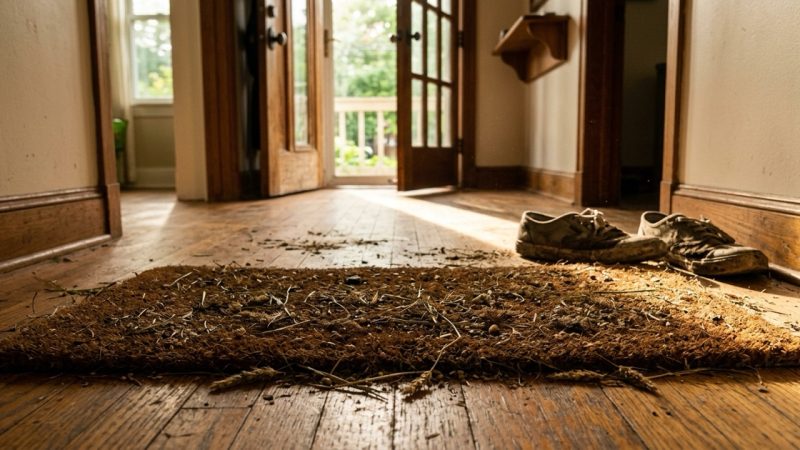
Adopt a shoes-off policy. Removing shoes at the door stops contaminated soil and flood mud from being tracked inside and turning into house dust.
Cover bare soil. Grass, clean mulch, or ground cover keeps contaminated soil from becoming airborne dust and blocks direct skin contact. Keep children and pets off bare, affected ground.
Treat floodwater as contaminated. After the Tarkiln Branch or any creek near an industrial site floods, keep out of standing water and the mud it leaves behind. Wear gloves and boots for cleanup, and wash skin afterward.
Filter your tap water. For arsenic, a reverse osmosis system certified to NSF/ANSI Standard 58 is the most thorough household reduction. Confirm the certification specifically lists arsenic reduction.
Garden in raised beds. If you grow food on a floodplain property, use raised beds with clean, tested soil and a barrier at the bottom, and wash all produce thoroughly.
Why This Matters Now
The Kil-Tone cleanup is a fix for contamination older than most of the people living around it. A pesticide plant that closed by the early 1930s released arsenic and lead that neither degrade nor stay put, and a floodplain has spent nearly a century carrying that contamination across some 55 properties.
The timeline is the lesson. The EPA added the site to the National Priorities List in 2016, finished 85 residential cleanups, and finalized the floodplain plan in July 2026. The pollution is a fixed, decades-old fact. The exposure it causes is present-day, and it repeats every time the creek floods.
For any household on a contaminated floodplain, the response mirrors the EPA’s own plan: find the source, cut the pathways, and confirm the numbers. Test the soil against 0.4 mg/kg for arsenic and 400 ppm for lead, test the well against 10 ppb, wash the hands, leave the shoes at the door, and treat floodwater as the carrier it is. The factory is long gone. Whether its arsenic and lead reach a child is a matter of pathways, and those, a homeowner can control.
Sources
- U.S. Environmental Protection Agency (EPA). EPA Finalizes Cleanup Plan to Address Contamination on Properties at the Former Kil-Tone Co. Superfund Site Floodplain in Vineland, New Jersey (2026) (July 22, 2026):
- U.S. Environmental Protection Agency (EPA), Former Kil-Tone Superfund site profile:
- U.S. Environmental Protection Agency (EPA), Arsenic in drinking water and the 10 ppb standard
- U.S. Environmental Protection Agency (EPA), Regional Screening Levels for arsenic and lead:
- U.S. Environmental Protection Agency (EPA), Lead information and residential soil cleanup:
- U.S. Agency for Toxic Substances and Disease Registry (ATSDR), Toxicological Profile for Arsenic:
- U.S. Centers for Disease Control and Prevention (CDC), Childhood Lead Poisoning Prevention:
Questions people ask
What did the EPA finalize in Vineland?
On July 22, 2026, the EPA finalized a cleanup plan to remove arsenic- and lead-contaminated soil from approximately 55 floodplain properties along the Tarkiln Branch in Vineland, New Jersey. The plan calls for excavating the contaminated soil, transporting it off-site for disposal, and restoring each residential and commercial property.
Where did the contamination come from?
The former Kil-Tone Company operated a pesticide manufacturing facility at 527 East Chestnut Avenue in Vineland from the late 1910s to the early 1930s. It released arsenic and lead that contaminated the facility, nearby properties, and downstream floodplain areas along the Tarkiln Branch. The site was added to the National Priorities List in 2016.
Why is the contamination still a problem after 90 years?
Arsenic and lead are elements, not compounds that degrade over time. They stay chemically stable in soil for centuries and bind to soil particles rather than dissolving away. Once they settle into the ground, they remain until something removes or moves them.
Why does a floodplain make contamination spread?
When the Tarkiln Branch floods, rising water picks up soil and the arsenic and lead bound to it, carries that sediment downstream, and drops it across the properties it covers as the water recedes. Each flood repeats the process, which is why the contamination now affects about 55 properties rather than just the original factory site.
How do arsenic and lead reach people?
Through three pathways: skin contact with contaminated soil during gardening and play, hand-to-mouth ingestion of soil and tracked-in dust (the dominant route, most affecting children), and floodwater that carries suspended contaminated sediment onto properties. Lead is a neurotoxin harmful to children's development, and arsenic is a known human carcinogen.
What thresholds should I know?
The EPA's arsenic limit in drinking water is 10 parts per billion. Its residential soil screening level for arsenic is 0.4 milligrams per kilogram. The residential cleanup level for lead in soil is commonly 400 parts per million. Test results at or above these levels signal the need for action.
Do I have to allow the cleanup on my property?
Yes, by choice. Cleanup on private property proceeds only after the owner grants written permission, and the EPA coordinates directly with each owner. Where full cleanup is not possible, the plan uses deed notices and long-term maintenance to keep the remedy protective.
What can I do at home to reduce exposure?
Test your soil against the 0.4 mg/kg arsenic and 400 ppm lead thresholds, test a private well against the 10 ppb arsenic limit, wash hands before eating, adopt a shoes-off policy, cover bare soil, treat floodwater and flood mud as contaminated, filter tap water with an NSF/ANSI 58 reverse osmosis system for arsenic, and garden in raised beds with clean soil.

Have questions about the environment inside your home?
Air quality, mold, EMF, light and water all shape how a house feels and how the people in it feel. Whatever your concern is, the first step is finding out what is there.
Our certified team of environmental professionals and advocates can help.