Federal cuts could take far more Colorado River water than states offered
Federal regulators want Arizona, California, and Nevada to give up nearly twice the water the states proposed cutting themselves. The…


Roughly 43 million Americans drink from a private well, and no federal agency is required to test any of them.
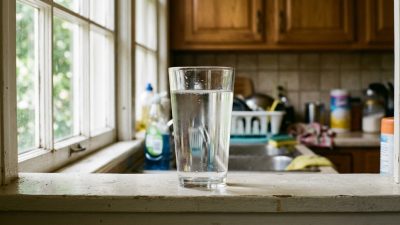
Everyone else gets water from a utility that measures what leaves the treatment plant, not what pours out of a kitchen tap. Those are 2 different questions. One of them is nobody's job.
Water is the exposure you take in every day without thinking about it. It carries whatever it picks up from the ground it flows through, the pipes it travels, and the fixtures it passes on the last few feet into your home.
Your water bill names the supplier. No bill and no meter usually means a private well, which no agency supplies or tests for you.
An annual summary every community water system sends its customers by July 1. It lists detected contaminants, the enforceable limits, and where the water comes from. It is free, and most utilities post it online.
Not always. The report describes water in the system, not water at your tap. Lead often enters after the utility's responsibility ends, so one house can have a problem its neighbors do not.
The utility samples through the year and results vary. An average can look fine while individual samples ran high. The range is where a spike shows up.
The owner, or nobody. The EPA and CDC both recommend an annual panel for coliform bacteria, nitrate, pH and total dissolved solids, and neither can require it.
Start with those 4, then add what your surroundings suggest. Nearby farmland points to nitrate and pesticides. An old gas station or landfill points to volatile organic compounds and metals.
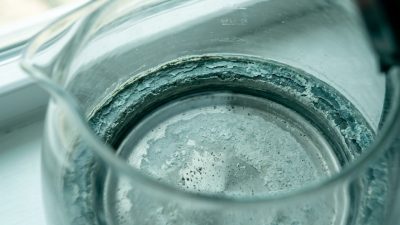
No. The USGS treats hardness as a nuisance rather than a health concern. It affects taste and buildup on fixtures, not your safety.
Only once you know what you are filtering. Filters are certified for specific contaminants, so a unit rated for taste and chlorine does nothing about lead or nitrate. Test first, then decide.
Most tap water starts in rivers, lakes and reservoirs, or in groundwater pulled from underground aquifers. That choice shapes what reaches you before anyone treats a drop. Roughly half of Americans drink surface water and roughly half drink groundwater, and the split runs by region rather than by anything a household chose.
Surface water reflects the land around it. Farm runoff, stormwater and whatever washes off nearby roads all end up in the same rivers that supply millions of homes. Groundwater runs steadier, though it carries naturally occurring metals and whatever seeps down from the surface above it.
Neither source is safer in general. A community drawing from a river and a community drawing from an aquifer simply face different lists of things worth looking for, and that list, rather than any broad judgement about surface versus underground, is what a sensible test should follow.
Clean water leaving a treatment plant does not stay that way automatically. The journey through miles of public mains and then your own plumbing can add things the utility never put in. Water sits in those pipes overnight, and the longer it sits in contact with metal, the more it picks up.
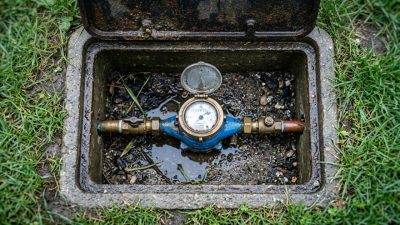
Lead is the clearest example. It rarely comes from the source. It enters from lead service lines, from solder installed before the 1986 federal ban, and from older brass fixtures. All 3 sit on the house side of the water meter. The CDC says there is no known safe level of lead exposure for children, which is why the pipe between the street and your sink matters as much as what flows through it.
This is also why 2 houses on one street can differ. The main under the road is shared. Your service line, your solder and your fixtures are not, which means the answer for your neighbor tells you very little about the answer for you.
Nitrate and PFAS can't be tasted, smelled or seen. The first comes off agricultural runoff, and the EPA sets a limit of 10 milligrams per liter to protect infants from a condition that reduces oxygen in the blood. Nothing warns you at the tap. The number is the only signal there is.
PFAS is the second. This class of industrial chemicals, used for decades in nonstick and waterproof products, breaks down so slowly it earned the name forever chemicals. That word is doing real work: these compounds were built not to break down, which is why they are still in the water decades after the products that carried them.
Both are regulated on the utility's side of the meter, and neither announces itself at the tap. A laboratory panel is the only way to turn either one from a worry into a number.
Start with the report you already have. Community water systems publish an annual Consumer Confidence Report online and by mail. Reading the range of results tells you more than the average alone.
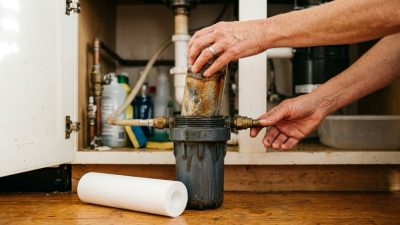
Then find out what your service line is made of. Utilities now publish service line inventories by address, so you can learn whether lead lies in the path to your home. If a test makes sense, use a state certified laboratory. Buy a filter last, once you know what you are treating.
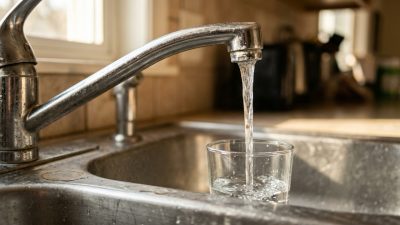
Run the water for 30 seconds to 2 minutes before drinking if a tap has stood unused overnight, which clears whatever sat in contact with the pipe while the house was asleep. It costs nothing. It is the one step that works before you know anything at all.
Federal regulators want Arizona, California, and Nevada to give up nearly twice the water the states proposed cutting themselves. The…
Sarasota County moved to a Phase 3 water shortage in April 2026, and reports of watering violations jumped from 200…
A Florida Atlantic biologist says the ban targets the wrong animals, because the sharks fed at offshore dive sites aren't…
A hyperscale site can use 1 million to 5 million gallons of water a day, and the rejected proposal also…
Chemical contamination is outpacing the speed at which U.S. treatment plants can be upgraded, leaving drinking water systems years behind…
More than half the lake is covered in blue-green algae fed by farm runoff, with heat and still water helping…
Every organism leaves DNA in the water it moves through, and one set of river samples picked up wildlife, humans…
Because the marina sits on public submerged land, most of its slips are supposed to remain available to the public…
3M's own filing says it admitted nothing, and no judge ever ruled on who caused the contamination. The money goes…
In EPA testing, PFAS appeared in 42.4% of large water systems and 28.4% of small ones, with the sharpest gap…
Children exposed before birth to drinking water at the U.S. legal arsenic limit were twice as likely to develop type…
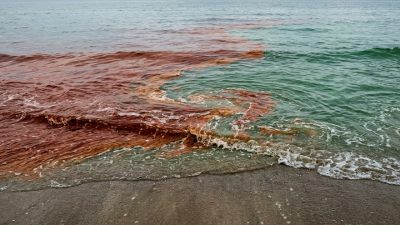
Waves break red tide algae apart and throw brevetoxin into the air, where researchers kept finding it up to 2.6…
One utility found fire-related contamination in more than half the service connections it tested near burned lots. Boiling can make…
Two rare cancers came back higher in districts where PFOS had been detected, while the biggest cancer group, leukemia, showed…
A standard home inspection is visual and noninvasive, which leaves mold, radon, water quality, lead paint, septic systems, and buried…
Private wells have no routine inspector, no required monthly sample, and no rule saying they should. The biggest survey of…
Every community water system has to put its water source in writing and get it to you by 1 July…
Somebody set that ceiling in 1986 against a bone disease severe enough to stiffen your joints. What parents ask about…
A softener doesn't take hardness out, it trades calcium for sodium: about 8 parts per million for every grain, so…
A dog gulps while it swims, then spends 10 or 15 minutes licking the rest out of its coat. That…
A utility passes its lead test when 9 sampled homes in 10 come in under the line. Home number 10…
Air quality, mold, EMF, light and water all shape how a house feels and how the people in it feel. Whatever your concern is, the first step is finding out what is there.
Our certified team of environmental professionals and advocates can help.